Buying Guide for the Best Megger Tester
When choosing a megger tester, it's important to understand the key specifications and how they relate to your specific needs. A megger tester, also known as an insulation resistance tester, is used to measure the electrical resistance of insulators. This is crucial for ensuring the safety and efficiency of electrical systems. By understanding the key specs, you can select a megger tester that best fits your requirements, whether you're working on residential, commercial, or industrial projects.Test VoltageTest voltage is the voltage applied by the megger tester to measure insulation resistance. This spec is important because different applications require different test voltages. For example, low-voltage systems might only need a test voltage of 250V, while high-voltage systems could require up to 5kV or more. To choose the right test voltage, consider the voltage rating of the equipment you are testing. Ensure the megger tester can provide a voltage that is appropriate for your specific application to avoid damaging the equipment or getting inaccurate readings.
Resistance RangeThe resistance range indicates the range of resistance values that the megger tester can measure. This is important because it determines the tester's ability to measure both very high and very low resistance values. Typically, a wider resistance range is more versatile. For general electrical work, a range from a few kilo-ohms to several giga-ohms is usually sufficient. If you are working with high-voltage equipment or need to measure very high insulation resistance, look for a tester with a higher upper limit.
AccuracyAccuracy refers to how close the megger tester's readings are to the actual resistance values. This is crucial for ensuring reliable and precise measurements. Accuracy is usually expressed as a percentage. Higher accuracy is better, but it may not be necessary for all applications. For routine maintenance and troubleshooting, a standard accuracy of ±2% to ±5% is typically adequate. For more critical applications, such as in industrial settings, you might need a tester with higher accuracy.
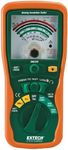
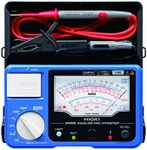
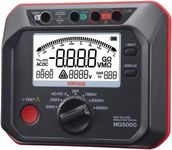
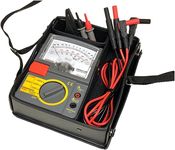
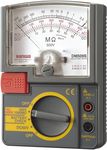
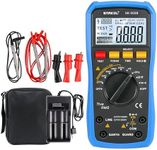
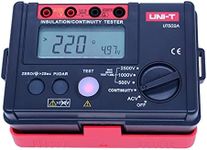
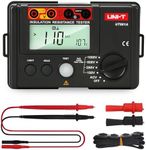
Display TypeThe display type of a megger tester can be either analog or digital. This spec is important because it affects how you read and interpret the measurements. Digital displays are generally easier to read and provide more precise readings, making them suitable for most users. Analog displays, on the other hand, can be useful for observing trends and changes in resistance over time. Choose a display type based on your preference and the specific requirements of your work.
Safety FeaturesSafety features in a megger tester include things like over-voltage protection, automatic discharge of capacitive voltage, and insulation category ratings. These features are important to protect both the user and the equipment being tested. Over-voltage protection prevents damage to the tester and the equipment in case of unexpected high voltages. Automatic discharge ensures that any stored energy in the equipment is safely released after testing. Insulation category ratings indicate the tester's suitability for different environments. Choose a tester with appropriate safety features for your specific application to ensure safe operation.
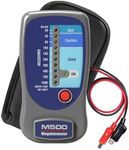
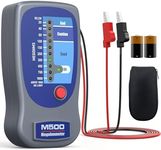
PortabilityPortability refers to the ease with which you can transport and use the megger tester in different locations. This is important for fieldwork or when you need to test multiple sites. Portable testers are typically lightweight, compact, and may come with carrying cases. If you need to move around frequently or work in various locations, a portable megger tester will be more convenient. For stationary use in a workshop or lab, portability may be less of a concern.