Buying Guide for the Best Marine Spotlight For Boats
Choosing the right marine spotlight for your boat is crucial for ensuring safety and visibility during nighttime navigation or low-light conditions. A good spotlight can help you identify obstacles, locate buoys, and even assist in search and rescue operations. When selecting a marine spotlight, consider the following key specifications to find the best fit for your needs.Brightness (Lumens)Brightness, measured in lumens, indicates how much light the spotlight emits. This is important because it determines how well you can see in the dark. Spotlights with lower lumens (up to 500 lumens) are suitable for close-range tasks, such as reading charts or illuminating the deck. Medium brightness (500-2000 lumens) is ideal for general navigation and spotting objects at a moderate distance. High brightness (2000+ lumens) is best for long-range visibility and search and rescue operations. Choose the brightness level based on how far you need to see and the typical conditions you encounter.
Beam DistanceBeam distance refers to how far the light can reach. This is crucial for spotting distant objects or hazards. Short beam distances (up to 200 meters) are adequate for close-range tasks and small boats. Medium beam distances (200-500 meters) are suitable for general navigation and medium-sized boats. Long beam distances (500+ meters) are necessary for large boats and open water navigation. Consider the size of your boat and the typical distances you need to cover when choosing the beam distance.
Beam TypeBeam type can be either a spot beam or a flood beam. Spot beams are narrow and focused, providing a long reach and are ideal for pinpointing distant objects. Flood beams are wider and cover a larger area, making them suitable for illuminating a broad area at a shorter distance. Some spotlights offer adjustable beams, allowing you to switch between spot and flood modes. Choose a beam type based on whether you need to see far away or cover a wide area.
Power SourceMarine spotlights can be powered by batteries, a direct connection to the boat's electrical system, or both. Battery-powered spotlights offer portability and can be used in emergencies, but they require regular recharging or battery replacement. Spotlights connected to the boat's electrical system provide continuous power but are less portable. Some models offer dual power options for versatility. Consider how you plan to use the spotlight and whether portability or continuous power is more important for your needs.
Durability and Waterproof RatingDurability and waterproof rating are essential for marine environments where exposure to water and harsh conditions is common. Look for spotlights with a high waterproof rating (IPX6 or higher) to ensure they can withstand heavy splashing or submersion. Additionally, consider spotlights made from corrosion-resistant materials to prevent damage from saltwater. Choose a spotlight that can handle the environmental conditions you expect to encounter on your boat.
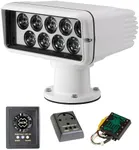
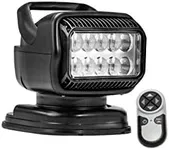
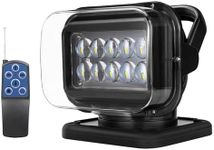
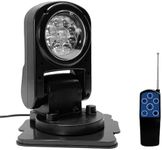
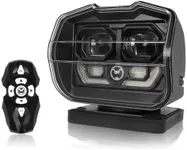
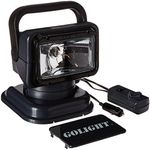
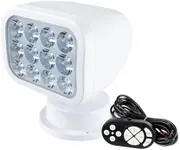
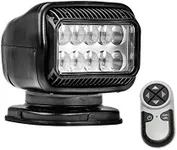
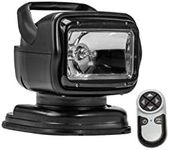
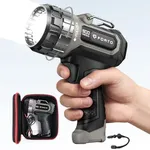
Mounting OptionsMounting options include handheld, fixed, or remote-controlled spotlights. Handheld spotlights offer flexibility and can be used in various locations on the boat. Fixed spotlights are mounted in a specific location and provide consistent illumination in a set direction. Remote-controlled spotlights allow you to adjust the direction of the light from a distance, offering convenience and precision. Consider how you plan to use the spotlight and whether you need the flexibility of a handheld model or the convenience of a fixed or remote-controlled option.