Buying Guide for the Best Log Splitters
Choosing the right log splitter can make your wood splitting tasks much easier and more efficient. When selecting a log splitter, it's important to consider the type of wood you'll be splitting, the volume of wood, and the frequency of use. Understanding the key specifications will help you make an informed decision that best suits your needs.TonnageTonnage refers to the splitting force of the log splitter, measured in tons. This is important because it determines the size and hardness of the logs the splitter can handle. For light-duty tasks, such as splitting softwood or small logs, a splitter with 4-6 tons of force may be sufficient. For medium-duty tasks, like splitting hardwood or larger logs, a splitter with 7-20 tons of force is more appropriate. For heavy-duty tasks, such as splitting very large or very hard logs, a splitter with 20+ tons of force is recommended. Choose the tonnage based on the type and size of wood you will be splitting most often.
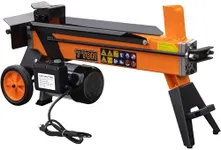
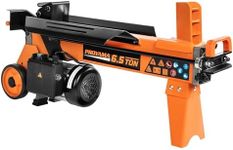
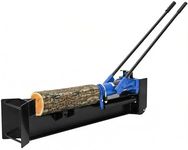
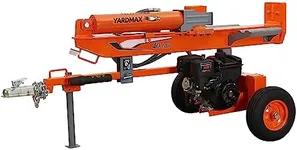
Power SourceLog splitters can be powered by electricity, gas, or manual operation. Electric log splitters are quieter, require less maintenance, and are suitable for light to medium-duty tasks. They are ideal for use in residential areas where noise and emissions are a concern. Gas-powered log splitters are more powerful and can handle heavier tasks, making them suitable for larger volumes of wood and tougher logs. They are more portable but require regular maintenance. Manual log splitters, such as hydraulic or kinetic models, are best for occasional use and small volumes of wood. Consider your power needs and the convenience of each type when making your choice.
Cycle TimeCycle time is the amount of time it takes for the log splitter to complete a full splitting cycle, from the start of the split to the return of the ram. This is important because it affects how quickly you can split multiple logs. Faster cycle times, typically under 15 seconds, are ideal for high-volume splitting and can significantly reduce the time spent on the task. Slower cycle times, over 15 seconds, may be sufficient for occasional use or smaller volumes of wood. Choose a cycle time that matches the volume of wood you plan to split and how quickly you want to complete the job.
Log CapacityLog capacity refers to the maximum length and diameter of logs that the splitter can handle. This is important because it determines the size of logs you can split without having to cut them down further. For residential use, a log splitter with a capacity of 20-25 inches in length and up to 12 inches in diameter is usually sufficient. For more demanding tasks, look for splitters that can handle longer and wider logs. Consider the typical size of the logs you will be splitting and choose a log splitter with a capacity that meets or exceeds those dimensions.
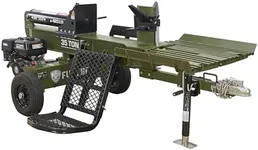
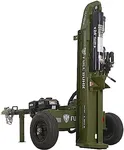
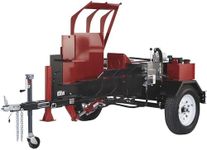
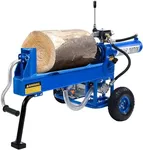
OrientationLog splitters come in horizontal, vertical, or dual (both horizontal and vertical) orientations. Horizontal splitters are generally easier to use for smaller logs and are more common for residential use. Vertical splitters are better for larger, heavier logs as they allow you to roll the log into place rather than lifting it. Dual splitters offer the flexibility to switch between horizontal and vertical orientations, making them versatile for different types of logs and splitting tasks. Consider the size and weight of the logs you will be splitting and choose an orientation that will make the task easier and more efficient for you.