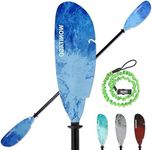
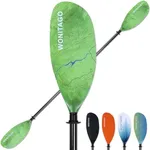
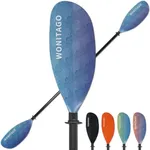
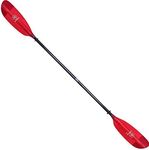
Buying Guide for the Best Lightest Kayak Paddle
Choosing the right kayak paddle is crucial for an enjoyable and efficient kayaking experience. The right paddle can make a significant difference in your comfort, speed, and overall performance on the water. When selecting a paddle, it's important to consider several key specifications to ensure you find the best fit for your needs. Here are the key specs to consider and how to navigate them.WeightThe weight of a kayak paddle is one of the most important factors to consider. A lighter paddle reduces fatigue and allows for longer paddling sessions without straining your muscles. Paddle weights can range from around 20 ounces to over 40 ounces. For recreational paddlers, a paddle in the 30-35 ounce range is usually sufficient. For those who plan on long-distance or frequent paddling, a paddle under 30 ounces is ideal. Consider your paddling style and frequency to determine the best weight for you.
MaterialThe material of the paddle affects both its weight and durability. Common materials include aluminum, fiberglass, and carbon fiber. Aluminum paddles are the heaviest but also the most affordable and durable, making them suitable for beginners or casual paddlers. Fiberglass paddles are lighter and offer a good balance between weight and cost, making them a popular choice for intermediate paddlers. Carbon fiber paddles are the lightest and most efficient but also the most expensive, ideal for serious or competitive paddlers. Choose a material based on your budget and paddling needs.
Blade Shape and SizeThe shape and size of the paddle blade affect your paddling efficiency and style. Larger blades provide more power and are suitable for strong paddlers or those who need quick acceleration, such as in whitewater kayaking. Smaller blades are easier to handle and require less effort, making them ideal for long-distance or recreational paddling. Blade shapes can be symmetrical or asymmetrical, with asymmetrical blades offering a more efficient stroke. Consider your paddling environment and strength to choose the right blade shape and size.
Shaft DesignThe design of the paddle shaft can impact your comfort and control. Shafts can be straight or bent. Straight shafts are more common and versatile, suitable for most paddling styles. Bent shafts have a slight angle that can reduce strain on your wrists and provide a more ergonomic grip, making them ideal for long-distance paddling. Additionally, some shafts are adjustable in length, allowing you to customize the paddle to your height and paddling style. Consider your comfort and paddling habits when choosing a shaft design.
LengthThe length of the paddle is crucial for efficient paddling and comfort. Paddle lengths typically range from 210 cm to 260 cm. The right length depends on your height, the width of your kayak, and your paddling style. Taller paddlers and those with wider kayaks will need longer paddles, while shorter paddlers and those with narrower kayaks can use shorter paddles. A general guideline is to choose a paddle that allows you to comfortably reach the water without overextending your arms. Test different lengths to find the most comfortable fit for you.