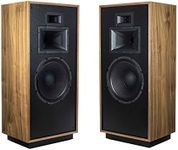
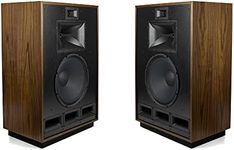
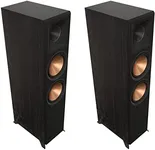
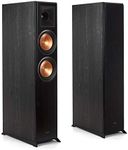
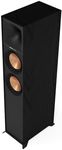
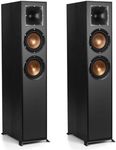
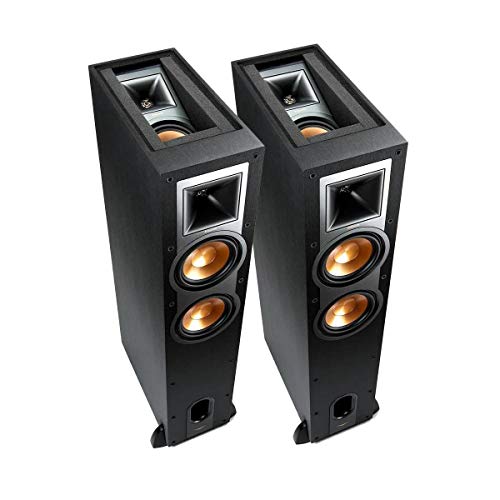
Buying Guide for the Best Klipsch Floor Standing Speakers
Choosing the right floor-standing speakers can significantly enhance your audio experience, whether you're setting up a home theater or simply enjoying music. It's important to understand the key specifications that will impact the sound quality and performance of the speakers. By knowing what each spec means and how it relates to your needs, you can make an informed decision and find the best fit for your listening preferences.Frequency ResponseFrequency response refers to the range of sound frequencies a speaker can reproduce, typically measured in Hertz (Hz). This spec is important because it determines how well the speaker can handle different types of audio, from deep bass to high treble. A wider frequency response range means the speaker can produce a more complete and accurate sound. For general listening, a range of 20Hz to 20kHz is ideal, as it covers the full spectrum of human hearing. If you enjoy bass-heavy music or movies, look for speakers with a lower minimum frequency.
SensitivitySensitivity measures how effectively a speaker converts power into sound, expressed in decibels (dB). This spec is crucial because it affects the loudness of the speaker at a given power level. Higher sensitivity speakers (above 90dB) require less power to produce the same volume as lower sensitivity speakers (below 90dB). If you have a lower-powered amplifier or receiver, choosing speakers with higher sensitivity can help you achieve better sound without needing to upgrade your equipment.
ImpedanceImpedance is the resistance a speaker offers to the electrical current from the amplifier, measured in ohms. This spec is important because it affects the compatibility between the speaker and your amplifier. Most floor-standing speakers have an impedance of 4, 6, or 8 ohms. Ensure your amplifier can handle the impedance of the speakers you choose. Generally, 8-ohm speakers are more compatible with a wider range of amplifiers, making them a safer choice for most setups.
Power HandlingPower handling indicates the maximum amount of power a speaker can handle without being damaged, measured in watts. This spec is important for ensuring your speakers can handle the output from your amplifier without distortion or damage. Look for speakers with power handling that matches or exceeds the output of your amplifier. If you enjoy listening at high volumes, choose speakers with higher power handling capabilities to ensure they can handle the demand.
Driver ConfigurationDriver configuration refers to the arrangement and types of drivers (woofers, tweeters, midrange) within the speaker. This spec is important because it affects the overall sound quality and clarity. A typical floor-standing speaker may have multiple drivers to handle different frequency ranges. For balanced sound, look for speakers with a combination of woofers for bass, midrange drivers for vocals and instruments, and tweeters for high frequencies. If you prefer a specific type of sound, such as more bass or clearer vocals, pay attention to the driver configuration that emphasizes those frequencies.
Cabinet DesignCabinet design refers to the physical construction and materials used in the speaker's enclosure. This spec is important because it impacts the speaker's sound quality and durability. A well-designed cabinet can reduce unwanted vibrations and resonance, resulting in clearer sound. Look for speakers with sturdy, well-built cabinets made from high-quality materials like wood or MDF. If aesthetics are important to you, consider the design and finish of the cabinet to ensure it complements your room decor.