We Use CookiesWe use cookies to enhance the security, performance, functionality and for analytical and promotional activities. By continuing to browse this site you are agreeing to our privacy policy

Best Kids Telescopes

From leading brands and best sellers available on the web.
#1

Winner

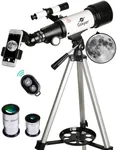
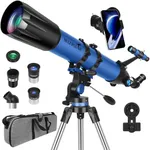
Gskyer Telescope, 70mm Aperture 400

Gskyer

49%OFF

editor-choice-ribbon

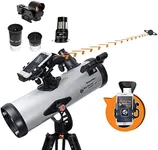
Gskyer Telescope, 70mm Aperture 400mm AZ Mount Astronomical Refracting Telescope for Kids Beginners - Travel Telescope with Carry Bag, Phone Adapter and Wireless Remote.
View on Amazon
#2
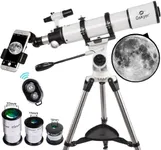
Gskyer Telescope 600x90mm AZ Astron

Gskyer

17%OFF

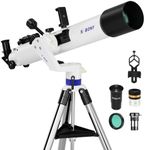
Gskyer Telescope 600x90mm AZ Astronomical Refractor Telescope for Adults Astronomy, German Technology Scope

View on Amazon
#3
Telescope, 90mm Aperture 700mm with

Koolpte

44%OFF

editor-choice-ribbon

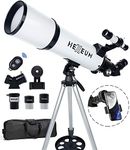
Telescope, 90mm Aperture 700mm with Vertisteel AZ Mounting Slow-Motion Mount, High Power for Astronomy Enthusiasts, Easy for Kids, with Carry Bag, Wireless Remote Control, Phone Adapter,White

View on Amazon
#4
HUGERSTAR Telescope, Telescope for

HUGERSTAR

9%OFF

editor-choice-ribbon

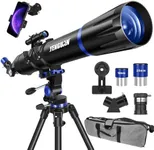
HUGERSTAR Telescope, Telescope for Adults & Kids & Astronomy Beginners, 80mm Aperture 600mm Portable Refractor Telescopes Fully Multi-Coated Optics with AZ Mount Tripod, Phone Adapter and Moon Filter

View on Amazon
#5
Telescope 80mm Aperture 600mm - Ast

HEXEUM

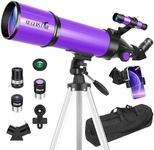
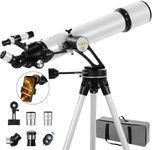
Telescope 80mm Aperture 600mm - Astronomical Portable Refracting Telescope Fully Multi-coated High Transmission Coatings AZ Mount with Tripod Phone Adapter, Wireless Control, Carrying Bag. Easy Set Up
View on Amazon
#6
Telescopes for Adults Astronomy, 80

EACONN

6%OFF

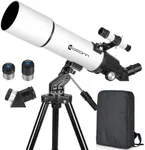
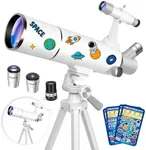
Telescopes for Adults Astronomy, 80mm Aperture 600mm Refractor Telescope for Kids & Beginners, Compact and Portable Travel Telescopio with Backpack
View on Amazon
#7
Celestron Travel Scope 80 Portable

Celestron

13%OFF

Celestron Travel Scope 80 Portable Refractor Telescope – 80mm Aperture, Fully-Coated Glass Optics – Includes Tripod, Smartphone Adapter, Backpack & Software – Ideal for Beginners & Travel

View on Amazon
#8
Hawkko Telescope for Adults & Kids

Hawkko

Hawkko Telescope for Adults & Kids – 80mm Aperture 500mm Telescopes for Adults Astronomy, (20X-150X) Portable Refractor Telescope Kit for Beginners with Decorate Stickers, AZ Tripod, Phone Adapter

View on Amazon
#9
Telescope for Kids & Adults - 70mm

HEXEUM

40%OFF

Telescope for Kids & Adults - 70mm Aperture 500mm AZ Mount Fully Multi-Coated Optics Astronomical refracting Portable Telescopes, with Tripod Phone Adapter, Carrying Bag, Remote Control White

View on Amazon
#10
Celestron – AstroMaster 70AZ Telesc

Celestron

25%OFF

Celestron – AstroMaster 70AZ Telescope – Refractor Telescope – Fully-Coated Glass Optics – Adjustable-Height Tripod – Bonus Astronomy Software Package

View on Amazon
How do we rank products for you?

Our technology thoroughly searches through the online shopping world, reviewing hundreds of sites. We then process and analyze this information, updating in real-time to bring you the latest top-rated products. This way, you always get the best and most current options available.

headphones-stars

Most Popular Categories Right Now

Buying Guide for the Best Kids Telescopes

Choosing a telescope for kids can be a fun and educational experience. The right telescope can spark a lifelong interest in astronomy and science. When selecting a telescope for a child, it's important to consider factors such as ease of use, durability, and the ability to provide clear and enjoyable views of the night sky. Here are some key specifications to consider when choosing a kids' telescope and how to navigate them to find the best fit for your young astronomer.
ApertureAperture refers to the diameter of the telescope's main lens or mirror. It is one of the most important specs because it determines how much light the telescope can gather, which affects the clarity and brightness of the images. For kids, a smaller aperture (around 60mm to 80mm) is usually sufficient and easier to handle. Larger apertures (100mm and above) provide better views but can be more cumbersome and expensive. Choose an aperture that balances ease of use with the ability to see celestial objects clearly.
MagnificationMagnification is how much larger the telescope can make objects appear. While it might seem like higher magnification is always better, it's actually more important to have a clear image. Telescopes with moderate magnification (20x to 50x) are usually best for kids, as they provide a good balance between image size and clarity. Higher magnifications can be harder to use and may result in blurry images if the telescope's aperture isn't large enough to support them.
Mount TypeThe mount is what holds the telescope steady and allows it to be aimed at different parts of the sky. There are two main types: altazimuth and equatorial. Altazimuth mounts move up and down and left to right, making them simpler and more intuitive for kids to use. Equatorial mounts are more complex and designed for tracking the motion of stars, which can be challenging for beginners. For kids, an altazimuth mount is usually the best choice due to its simplicity and ease of use.
PortabilityPortability refers to how easy it is to move and transport the telescope. This is important for kids who may want to take their telescope to different locations or simply move it around the yard. Lightweight and compact telescopes are ideal for children, as they are easier to handle and set up. Look for telescopes that are designed to be portable, with features like collapsible stands or carrying cases.
DurabilityDurability is crucial when selecting a telescope for kids, as it needs to withstand the occasional bump or drop. Telescopes made from sturdy materials like metal or high-quality plastic are more likely to endure rough handling. Additionally, look for models with protective features such as lens caps and sturdy mounts to ensure the telescope remains in good condition over time.
Ease of UseEase of use is essential for keeping kids engaged and interested in astronomy. Telescopes with simple controls, clear instructions, and easy setup are best for young users. Features like red dot finders or smartphone compatibility can also make it easier for kids to locate and view celestial objects. Choose a telescope that your child can use independently with minimal frustration.