Buying Guide for the Best Iwata Airbrush Kits
Choosing the right Iwata airbrush kit can be a rewarding experience, especially if you understand the key specifications and how they align with your needs. Whether you're a beginner or a professional, knowing what to look for will help you make an informed decision. Here are the key specs to consider when selecting an Iwata airbrush kit and how to navigate them.Nozzle SizeThe nozzle size of an airbrush determines the fineness of the spray pattern and the type of work it is best suited for. Smaller nozzles (0.2mm to 0.3mm) are ideal for fine detail work, such as illustration and model painting. Medium nozzles (0.3mm to 0.5mm) are versatile and can handle a range of tasks from fine detail to broader coverage. Larger nozzles (0.5mm and above) are best for covering large areas and for thicker paints. Choose a nozzle size based on the precision and type of projects you plan to work on.
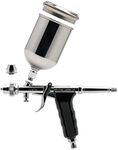
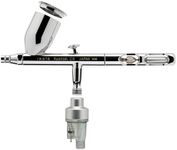
Feed TypeAirbrushes come in different feed types: gravity feed, siphon feed, and side feed. Gravity feed airbrushes have a cup on top and use gravity to pull the paint into the airbrush, making them efficient and easy to clean, ideal for fine detail work. Siphon feed airbrushes have a bottle or jar underneath and use suction to draw the paint up, suitable for larger volumes of paint and broader coverage. Side feed airbrushes have a cup on the side, offering a balance between the two and allowing for better visibility of the work area. Choose the feed type based on the volume of paint you need and the type of projects you will be working on.
Action TypeAirbrushes can be single-action or double-action. Single-action airbrushes control the airflow with a single trigger, making them simpler to use and suitable for beginners or for tasks that require consistent spray patterns. Double-action airbrushes allow for independent control of both air and paint flow with a dual trigger, providing greater precision and versatility, ideal for more advanced users and detailed work. Consider your skill level and the complexity of your projects when choosing the action type.
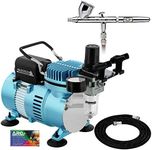
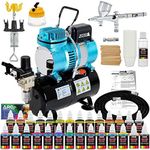
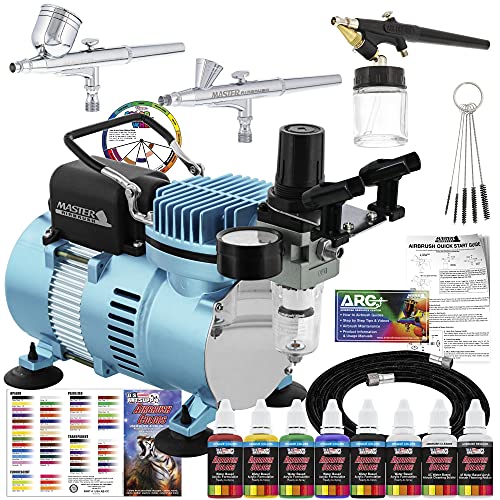
CompressorThe compressor is a crucial component of an airbrush kit, providing the air pressure needed to operate the airbrush. Compressors vary in size, power, and noise levels. Smaller, quieter compressors are suitable for indoor use and smaller projects, while larger, more powerful compressors are better for extensive work and can handle higher pressures. Look for a compressor with adjustable pressure settings to give you more control over your work. Choose a compressor based on the scale of your projects and your working environment.
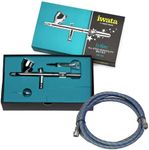
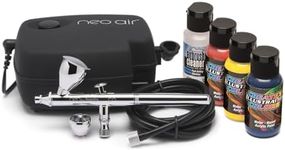
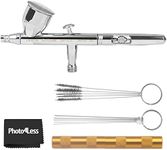
AccessoriesAirbrush kits often come with various accessories such as hoses, cleaning tools, and additional nozzles or needles. These accessories can enhance your airbrushing experience by providing the necessary tools for maintenance and versatility. Consider what accessories are included in the kit and how they align with your needs. For example, cleaning tools are essential for maintaining the airbrush, while additional nozzles and needles can expand the range of techniques you can achieve. Choose a kit with accessories that will support your specific projects and maintenance requirements.