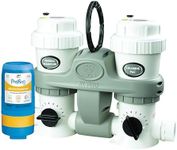
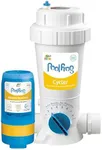
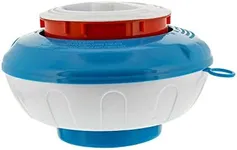
Buying Guide for the Best Inline Chlorinators
Choosing the right inline chlorinator for your pool is essential to maintaining clean and safe water. An inline chlorinator is a device that automatically adds chlorine to your pool water, ensuring that the chlorine levels remain consistent. This helps to keep the water free from harmful bacteria and algae. When selecting an inline chlorinator, there are several key specifications to consider. Understanding these specifications will help you make an informed decision and choose the best product for your needs.Chlorine OutputChlorine output refers to the amount of chlorine the chlorinator can produce and dispense into the pool water. This is important because it determines how effectively the chlorinator can maintain the desired chlorine levels. Chlorine output is usually measured in pounds per day. For small pools, a lower output may be sufficient, while larger pools will require a higher output to ensure proper sanitation. Consider the size of your pool and the typical usage to determine the appropriate chlorine output for your needs.
Pool Size CompatibilityPool size compatibility indicates the maximum pool size that the chlorinator can effectively service. This is crucial because using a chlorinator that is not suited for your pool size can lead to inadequate chlorination or over-chlorination. Chlorinators are often rated for specific pool sizes, such as up to 10,000 gallons, 20,000 gallons, etc. To choose the right chlorinator, know the volume of your pool and select a model that matches or exceeds this capacity.
Flow RateFlow rate is the amount of water that passes through the chlorinator per minute, usually measured in gallons per minute (GPM). This specification is important because it affects how efficiently the chlorinator can distribute chlorine throughout the pool. A higher flow rate ensures that chlorine is evenly dispersed, which is essential for maintaining consistent water quality. When selecting a chlorinator, consider the flow rate of your pool's pump and ensure that the chlorinator can handle this rate.
Ease of Installation and MaintenanceEase of installation and maintenance refers to how simple it is to set up and maintain the chlorinator. This is important because a chlorinator that is difficult to install or maintain can lead to frustration and potential issues with pool sanitation. Look for models that come with clear instructions and require minimal tools for installation. Additionally, consider how easy it is to access and replace the chlorine tablets or cartridges, as this will affect the ongoing maintenance of the device.
Durability and Material QualityDurability and material quality refer to the construction and longevity of the chlorinator. This is important because a well-built chlorinator will last longer and perform more reliably. Chlorinators are typically made from materials like plastic or metal, with higher-quality models using corrosion-resistant materials to withstand the harsh pool environment. When choosing a chlorinator, consider the materials used and look for features like UV resistance and chemical resistance to ensure long-term durability.
AdjustabilityAdjustability refers to the ability to control the amount of chlorine being dispensed into the pool. This is important because it allows you to fine-tune the chlorine levels based on factors like pool usage, weather conditions, and water temperature. Adjustable chlorinators typically have a dial or control panel that lets you set the desired chlorine output. Choose a chlorinator with easy-to-use adjustability features to ensure you can maintain optimal chlorine levels in your pool.