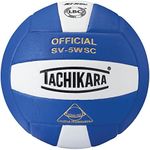
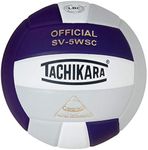
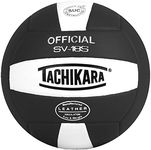
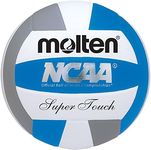
Buying Guide for the Best Indoor Volleyball
Choosing the right indoor volleyball can significantly impact your playing experience. Whether you're a beginner, intermediate, or advanced player, understanding the key specifications of a volleyball will help you make an informed decision. Here are the main factors to consider when selecting an indoor volleyball, along with explanations to guide you through the process.MaterialThe material of a volleyball affects its durability, feel, and performance. Indoor volleyballs are typically made from synthetic leather or genuine leather. Synthetic leather is more common and offers a good balance of durability and softness, making it suitable for most players. Genuine leather volleyballs are often used in professional settings due to their superior feel and performance, but they require more maintenance. Choose synthetic leather if you are a recreational or intermediate player, and consider genuine leather if you are playing at a competitive level.
Size and WeightThe standard size for an indoor volleyball is around 65-67 cm in circumference, and it should weigh between 260-280 grams. These specifications are important because they ensure the ball is easy to handle and provides a consistent playing experience. For younger players or beginners, slightly lighter and smaller volleyballs are available to help them develop their skills without the strain of handling a full-sized ball. Always check the size and weight to ensure it matches your level of play and physical capability.
Panel ConstructionVolleyballs are made up of panels that are stitched or glued together. The number of panels and the construction method can affect the ball's flight and durability. Most indoor volleyballs have 18 panels, which provide a good balance of control and aerodynamics. Balls with fewer panels may offer a more predictable flight but can be less durable. For most players, an 18-panel ball is ideal, but if you are looking for specific performance characteristics, you might explore different panel configurations.
Bladder TypeThe bladder is the inner part of the volleyball that holds the air. It can be made from rubber or latex. Rubber bladders are more durable and maintain air pressure longer, making them suitable for regular use. Latex bladders offer a softer feel and better responsiveness but may require more frequent inflation. If you play frequently and need a low-maintenance ball, go for a rubber bladder. If you prioritize feel and performance, a latex bladder might be the better choice.
Grip and TextureThe grip and texture of a volleyball affect how well you can control and handle the ball. A ball with a slightly textured surface provides better grip, which is important for serving, passing, and setting. Smooth balls may be more challenging to control but can offer a faster game. Beginners and intermediate players should look for a ball with a good grip to help improve their skills, while advanced players might prefer a smoother ball for a faster-paced game.