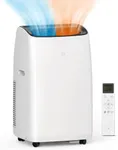
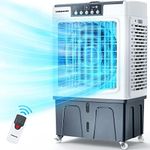
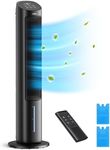
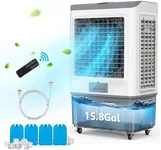
Buying Guide for the Best Indoor Air Cooler
Choosing the right indoor air cooler can significantly improve your comfort during hot weather. An air cooler, also known as an evaporative cooler, uses water evaporation to cool the air, making it an energy-efficient alternative to air conditioners. To find the best fit for you, consider the size of the space you need to cool, the climate you live in, and your personal preferences for features and maintenance. Here are some key specifications to help you make an informed decision.Cooling CapacityCooling capacity, often measured in cubic feet per minute (CFM), indicates how much air the cooler can process and cool. This is important because it determines how effectively the cooler can lower the temperature in your space. For small rooms, a cooler with a lower CFM (around 200-400) is sufficient. For medium-sized rooms, look for a CFM between 400-700. For large spaces, you may need a cooler with a CFM of 700 or higher. Choose a cooling capacity that matches the size of the area you want to cool for optimal performance.
Water Tank CapacityThe water tank capacity determines how long the air cooler can operate before needing a refill. This is crucial for convenience and continuous cooling. Small tanks (up to 10 liters) are suitable for personal use or small rooms, but they require frequent refilling. Medium tanks (10-30 liters) are ideal for medium-sized rooms and offer a balance between size and refill frequency. Large tanks (30 liters and above) are best for large spaces or extended use, as they can run for longer periods without needing a refill. Consider your usage patterns and the size of the area to choose the right tank capacity.
Airflow ControlAirflow control features, such as adjustable louvers and multiple fan speeds, allow you to direct and control the flow of cool air. This is important for achieving the desired cooling effect and comfort level. Basic models may offer manual louvers and a few fan speeds, which are sufficient for small spaces or personal use. More advanced models provide motorized louvers and a wider range of fan speeds, offering better control and customization for medium to large rooms. Choose a model with airflow control features that match your comfort preferences and the layout of your space.
Cooling PadsCooling pads are the components that absorb water and facilitate the evaporation process. Their quality and type affect the cooling efficiency and maintenance requirements. Honeycomb cooling pads are highly efficient and durable, making them suitable for most users. Aspen or wood wool pads are less expensive but may require more frequent replacement. For optimal cooling and low maintenance, choose a cooler with high-quality honeycomb pads, especially if you plan to use it frequently or in larger spaces.
PortabilityPortability refers to the ease with which you can move the air cooler from one place to another. This is important if you need to cool different areas of your home or office. Lightweight models with caster wheels are easy to move and are ideal for users who need flexibility. Larger, heavier models may offer more cooling power but can be cumbersome to relocate. Consider your need for mobility and choose a model that balances portability with the required cooling capacity.
Noise LevelThe noise level of an air cooler can impact your comfort, especially if you plan to use it in a bedroom or office. Noise levels are usually measured in decibels (dB). Quiet models (below 50 dB) are ideal for bedrooms or quiet environments. Moderate noise levels (50-60 dB) are acceptable for living rooms or areas with some background noise. Louder models (above 60 dB) may be suitable for larger spaces or outdoor use but can be disruptive in quiet settings. Choose a model with a noise level that suits your environment and personal tolerance for noise.
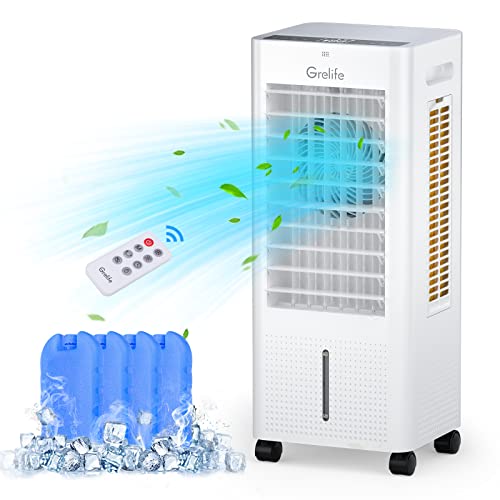
Additional FeaturesAdditional features such as remote control, timer, and air purification can enhance the convenience and functionality of your air cooler. A remote control allows you to adjust settings from a distance, which is useful for large rooms or when you are relaxing. A timer can help you save energy by automatically turning off the cooler after a set period. Air purification features, such as ionizers or filters, can improve indoor air quality by removing dust and allergens. Consider which additional features are important to you and choose a model that offers them.