Buying Guide for the Best Hvac Tubing Bender
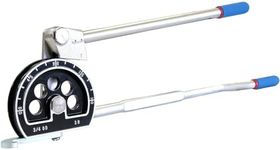
Choosing the right HVAC tubing bender is crucial for ensuring that your HVAC installation or repair work is done efficiently and accurately. A tubing bender allows you to bend tubes without kinking or damaging them, which is essential for maintaining the integrity of the HVAC system. When selecting a tubing bender, consider the type of work you will be doing, the materials you will be working with, and the specific requirements of your projects. Here are some key specifications to consider when choosing an HVAC tubing bender.Bending CapacityBending capacity refers to the maximum diameter and thickness of the tubing that the bender can handle. This is important because using a bender with insufficient capacity can result in poor bends or damage to the tubing. Bending capacities are usually segmented into light-duty, medium-duty, and heavy-duty. Light-duty benders are suitable for smaller, thinner tubes, while heavy-duty benders can handle larger, thicker tubes. Choose a bender with a capacity that matches the size and type of tubing you will be working with most frequently.
Bend RadiusThe bend radius is the minimum radius to which the tubing can be bent without causing damage. This is important because a smaller bend radius allows for tighter bends, which can be necessary in confined spaces. Bend radius is typically categorized as tight, medium, or large. Tight bend radius benders are ideal for intricate work in tight spaces, while large bend radius benders are better for more gradual bends. Consider the space constraints and the specific bending requirements of your projects when choosing the bend radius.
Material CompatibilityMaterial compatibility refers to the types of materials the bender can handle, such as copper, aluminum, or stainless steel. This is important because different materials have different properties and require different bending techniques. Some benders are designed to work with specific materials, while others are more versatile. If you primarily work with one type of material, choose a bender that is optimized for that material. If you work with multiple materials, look for a versatile bender that can handle all of them effectively.
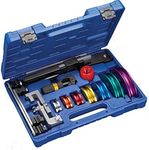
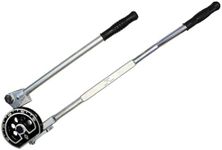
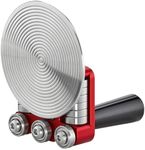
Manual vs. PoweredManual benders require physical effort to operate, while powered benders use electricity or hydraulics to perform the bending. This is important because powered benders can save time and reduce physical strain, especially for larger or more complex projects. Manual benders are typically more portable and less expensive, making them suitable for smaller jobs or occasional use. Powered benders are ideal for frequent use or larger projects where efficiency and ease of use are priorities. Consider the volume and complexity of your work when deciding between manual and powered benders.
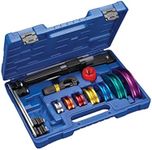
PortabilityPortability refers to how easy it is to transport and use the bender in different locations. This is important for HVAC professionals who need to move between job sites. Portable benders are typically lighter and more compact, making them easier to carry and use in various settings. However, they may have lower bending capacities compared to stationary models. If you frequently work on-site or in different locations, a portable bender is a good choice. For workshop-based work, a stationary bender with higher capacity might be more suitable.
Ease of UseEase of use refers to how simple and intuitive the bender is to operate. This is important because a user-friendly bender can improve efficiency and reduce the likelihood of errors. Features that contribute to ease of use include clear markings, ergonomic handles, and straightforward adjustment mechanisms. Benders with these features are typically categorized as beginner-friendly, intermediate, or advanced. Choose a bender that matches your skill level and the complexity of the tasks you will be performing.