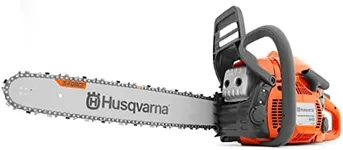
Buying Guide for the Best Husqvarna Chainsaws
Choosing the right chainsaw can make a significant difference in your cutting tasks, whether you're a professional logger or a homeowner looking to maintain your property. When selecting a Husqvarna chainsaw, it's important to consider several key specifications to ensure you get the best fit for your needs. Understanding these specs will help you make an informed decision and find a chainsaw that offers the right balance of power, weight, and features for your specific tasks.Engine PowerEngine power, measured in cubic centimeters (cc) or horsepower (hp), determines the cutting performance of the chainsaw. Higher engine power means more cutting strength, which is essential for heavy-duty tasks like felling large trees. For light to medium tasks, such as pruning or cutting small trees, a lower engine power (around 30-40cc) is sufficient. For more demanding tasks, consider a chainsaw with higher engine power (50cc and above). Choose based on the type of work you plan to do most frequently.
Bar LengthThe bar length, measured in inches, indicates the maximum length of the cutting blade. A longer bar can cut through larger diameter wood in a single pass, making it suitable for big trees and heavy-duty cutting. Bar lengths typically range from 12 to 24 inches. For general property maintenance and small to medium trees, a bar length of 14-16 inches is usually adequate. For larger trees and more extensive cutting, consider a bar length of 18 inches or more. Match the bar length to the size of the wood you'll be cutting most often.
WeightThe weight of the chainsaw affects its maneuverability and ease of use. Lighter chainsaws are easier to handle and cause less fatigue, making them ideal for extended use or for users who may not have a lot of upper body strength. Heavier chainsaws, while more powerful, can be more tiring to use over long periods. If you need a chainsaw for occasional use or lighter tasks, opt for a lighter model (under 10 pounds). For professional use or heavy-duty tasks, a heavier chainsaw (10-15 pounds) may be necessary, but ensure you can handle the weight comfortably.
Safety FeaturesSafety features are crucial in preventing accidents and injuries while using a chainsaw. Look for features such as chain brakes, which stop the chain quickly in case of kickback, and low kickback bars and chains, which reduce the risk of kickback. Other important safety features include anti-vibration systems to reduce user fatigue and improve control, and easy-to-access controls for quick adjustments. Prioritize chainsaws with comprehensive safety features, especially if you are a beginner or will be using the chainsaw frequently.
Ease of MaintenanceRegular maintenance is essential to keep your chainsaw running smoothly and extend its lifespan. Features that make maintenance easier include tool-less chain tensioning systems, which allow you to adjust the chain without additional tools, and easy-access air filters and spark plugs for quick cleaning and replacement. Consider how often you'll need to perform maintenance and choose a chainsaw with features that simplify these tasks. This is particularly important for users who may not be mechanically inclined or who want to minimize downtime.
Fuel Efficiency and EmissionsFuel efficiency and emissions are important for both environmental impact and operational cost. Chainsaws with efficient engines consume less fuel and produce fewer emissions, making them more eco-friendly and cost-effective over time. Look for models that comply with environmental regulations and have features like X-Torq engines, which reduce fuel consumption and emissions. If you plan to use the chainsaw frequently or for extended periods, choosing a model with good fuel efficiency can save you money and reduce your environmental footprint.