Buying Guide for the Best Humidifier With Hepa Filter
Choosing the right humidifier with a HEPA filter can significantly improve the air quality in your home by adding moisture to the air and removing harmful particles. To find the best fit for your needs, it's important to understand the key specifications and how they impact the performance and suitability of the humidifier for your specific situation.Coverage AreaThe coverage area indicates the maximum space the humidifier can effectively humidify, usually measured in square feet. This is important because you want to ensure the humidifier can handle the size of the room where it will be used. Small rooms (up to 300 sq ft) need a compact unit, medium rooms (300-500 sq ft) require a mid-sized unit, and large rooms (over 500 sq ft) need a larger, more powerful unit. Choose a humidifier with a coverage area that matches or slightly exceeds the size of your room for optimal performance.
Water Tank CapacityThe water tank capacity determines how much water the humidifier can hold and, consequently, how long it can run before needing a refill. This is important for convenience and continuous operation. Small tanks (up to 1 gallon) are suitable for short-term use or smaller rooms, medium tanks (1-2 gallons) are good for overnight use or medium-sized rooms, and large tanks (over 2 gallons) are ideal for extended use or larger rooms. Consider how often you want to refill the tank and the size of the room when choosing the capacity.
Humidification OutputHumidification output, measured in gallons per day, indicates how much moisture the humidifier can add to the air within a 24-hour period. This is crucial for maintaining the desired humidity level in your space. Low output (up to 1 gallon/day) is suitable for small rooms or low humidity needs, medium output (1-2 gallons/day) works for medium rooms or moderate humidity needs, and high output (over 2 gallons/day) is necessary for large rooms or high humidity needs. Match the output to your room size and desired humidity level for effective performance.
Noise LevelThe noise level of a humidifier, usually measured in decibels (dB), affects how quietly it operates. This is important if you plan to use the humidifier in a bedroom, office, or any other quiet environment. Low noise levels (under 30 dB) are ideal for bedrooms and nurseries, moderate noise levels (30-40 dB) are acceptable for living rooms and offices, and higher noise levels (over 40 dB) might be suitable for larger, noisier areas. Choose a humidifier with a noise level that won't disturb your activities or sleep.
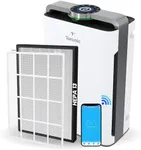
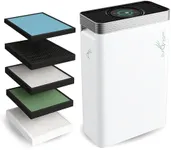
Filter Type and MaintenanceThe type of HEPA filter and its maintenance requirements are crucial for ensuring the humidifier continues to provide clean, healthy air. HEPA filters capture small particles like dust, pollen, and pet dander, which is important for allergy sufferers and maintaining good air quality. Some filters are washable and reusable, while others need regular replacement. Consider the ease of maintenance and the cost of replacement filters when choosing a humidifier. Opt for a model with a filter that fits your maintenance preferences and budget.
Additional FeaturesAdditional features such as adjustable humidity settings, timers, auto shut-off, and remote control can enhance the convenience and functionality of the humidifier. These features are important for customizing the operation to suit your needs and ensuring safe, efficient use. Adjustable settings allow you to control the humidity level, timers can schedule operation times, auto shut-off prevents the unit from running dry, and remote control offers convenience. Choose features that align with your lifestyle and preferences for the best user experience.