Buying Guide for the Best Home Energy Monitor
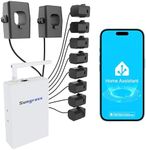
Choosing the right home energy monitor can help you track and manage your energy consumption, leading to potential savings on your utility bills and a more environmentally friendly household. When selecting a home energy monitor, it's important to consider several key specifications to ensure you get a device that meets your needs and provides accurate, useful information.CompatibilityCompatibility refers to whether the energy monitor can work with your existing electrical system and smart home devices. This is important because an incompatible monitor may not function correctly or provide accurate data. To navigate this, check if the monitor supports your home's voltage and current type (single-phase or three-phase). Additionally, ensure it can integrate with your smart home ecosystem, such as Alexa, Google Home, or other smart devices you use. Choose a monitor that matches your home's electrical setup and smart home devices to ensure seamless operation.
Installation TypeInstallation type indicates how the energy monitor is set up in your home. This is crucial because some monitors require professional installation, while others are DIY-friendly. Monitors can be divided into two segments: plug-in models and circuit-level models. Plug-in models are easy to install and simply plug into an outlet, making them ideal for renters or those who prefer a quick setup. Circuit-level models require installation in your electrical panel and may need an electrician, but they provide more detailed data. Choose a plug-in model for simplicity or a circuit-level model for comprehensive monitoring.
Data AccuracyData accuracy refers to how precisely the energy monitor measures and reports your energy usage. This is important because accurate data helps you make informed decisions about energy consumption. Accuracy can vary, with some monitors providing general estimates and others offering precise measurements. Look for monitors with a high accuracy rate, often indicated by a percentage (e.g., ±1%). If you need detailed insights for optimizing energy use, choose a monitor with high accuracy. For general awareness, a less precise monitor may suffice.
Real-Time MonitoringReal-time monitoring means the energy monitor provides immediate feedback on your energy usage. This is important for identifying energy-hungry devices and making instant adjustments. Monitors can offer real-time data through a display, app, or web interface. Some provide updates every few seconds, while others may update every few minutes. If you want to actively manage your energy use and quickly identify issues, choose a monitor with frequent real-time updates. For less active monitoring, a device with periodic updates may be adequate.
Historical Data TrackingHistorical data tracking allows the energy monitor to store and display past energy usage data. This is important for analyzing trends and making long-term energy-saving decisions. Monitors can vary in how much data they store and how they present it. Some offer detailed daily, weekly, and monthly reports, while others provide more basic summaries. If you want to track and analyze your energy use over time, choose a monitor with comprehensive historical data tracking. For a simpler overview, a monitor with basic tracking may be enough.
Alerts and NotificationsAlerts and notifications are features that inform you about unusual energy usage or potential issues. This is important for quickly addressing problems and avoiding high energy bills. Monitors can send alerts via email, text, or app notifications. Some allow you to set custom thresholds for alerts, while others have predefined settings. If you want to stay on top of your energy use and address issues promptly, choose a monitor with customizable alerts and notifications. For less frequent updates, a monitor with basic alert features may be suitable.
Integration with Other SystemsIntegration with other systems refers to the energy monitor's ability to work with other smart home devices and platforms. This is important for creating a cohesive smart home ecosystem. Monitors can integrate with systems like smart thermostats, solar panels, and home automation platforms. Some offer extensive compatibility, while others may be limited. If you have or plan to build a smart home, choose a monitor with broad integration capabilities. For standalone use, a monitor with limited integration may be sufficient.