Buying Guide for the Best Hollow Body Electric Guitars
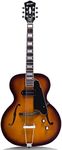
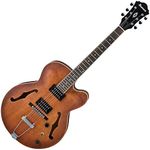
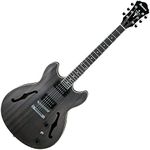
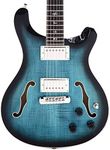
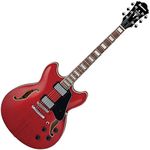
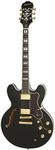
Choosing the right hollow-body electric guitar can be a rewarding experience, especially if you know what to look for. Hollow-body electric guitars are known for their warm, resonant tones and are often favored by jazz, blues, and rockabilly musicians. When selecting a hollow-body electric guitar, it's important to consider several key specifications to ensure you find the best fit for your playing style and musical needs. Here are some essential specs to consider and how to navigate them.Body Size and ShapeThe body size and shape of a hollow-body electric guitar affect its comfort, playability, and sound. Larger bodies typically produce a fuller, more resonant tone, while smaller bodies are easier to handle and may have a brighter sound. If you prefer a rich, warm tone and don't mind a larger instrument, a full-sized hollow-body might be ideal. Conversely, if you need a more comfortable and portable option, consider a smaller or thinline model.
Wood TypeThe type of wood used in a hollow-body electric guitar influences its tone and resonance. Common woods include maple, mahogany, and spruce. Maple tends to produce a bright, clear sound with good sustain, while mahogany offers a warmer, more mellow tone. Spruce is often used for its balanced tonal qualities. Consider the type of music you play and the sound you prefer when choosing the wood type. For example, jazz players might prefer the warmth of mahogany, while rockabilly musicians might favor the brightness of maple.
PickupsPickups are crucial in shaping the sound of your hollow-body electric guitar. They convert the vibrations of the strings into electrical signals. There are two main types: single-coil and humbucker. Single-coil pickups produce a bright, clear tone with a bit of a bite, while humbuckers offer a thicker, warmer sound with less noise. If you play jazz or blues, you might prefer the smooth, rich tones of humbuckers. For rockabilly or country, single-coil pickups might be more suitable.
Neck ProfileThe neck profile refers to the shape and thickness of the guitar's neck, which affects playability and comfort. Common profiles include C-shaped, U-shaped, and V-shaped. A C-shaped neck is generally comfortable for most players and is a good all-around choice. U-shaped necks are thicker and may be preferred by players with larger hands or those who play rhythm guitar. V-shaped necks have a distinct feel and are often favored by lead guitarists. Consider your hand size and playing style when choosing a neck profile.
Scale LengthScale length is the distance between the nut and the bridge of the guitar. It affects the tension of the strings and the overall feel of the instrument. Common scale lengths for hollow-body electric guitars range from 24.75 inches to 25.5 inches. A shorter scale length (24.75 inches) results in lower string tension, making it easier to bend notes and play with a lighter touch. A longer scale length (25.5 inches) provides more tension and a tighter feel, which can be beneficial for clarity and sustain. Choose a scale length that matches your playing style and comfort preferences.
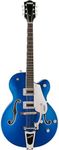
Bridge TypeThe bridge type on a hollow-body electric guitar affects its tuning stability and intonation. Common bridge types include fixed bridges and floating bridges. Fixed bridges, such as tune-o-matic bridges, offer better tuning stability and are easier to set up. Floating bridges, like Bigsby tremolos, allow for pitch bending effects but may require more maintenance and setup. If you prioritize tuning stability and ease of use, a fixed bridge might be the best choice. If you enjoy adding vibrato effects to your playing, consider a floating bridge.