We Use CookiesWe use cookies to enhance the security, performance, functionality and for analytical and promotional activities. By continuing to browse this site you are agreeing to our privacy policy

Best Hearing Impaired Doorbell

From leading brands and best sellers available on the web.
#1

Winner

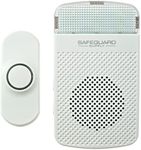
Plug In Doorbell - Safeguard Supply

Safeguard Supply

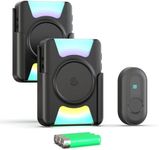
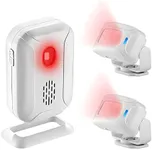
Plug In Doorbell - Safeguard Supply Dependable 3/4 Mile Long Range Wireless Doorbell - Adjustable Volume to 90dB- Deaf & Hearing Impaired Doorbell Mode Flashing Strobe Light

View on Amazon
#2
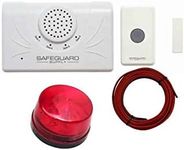
Safeguard Supply Warehouse Doorbell

Safeguard Supply

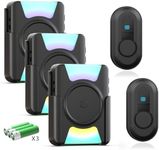
Safeguard Supply Warehouse Doorbell WDK ERA STROBE- Commercial Wireless Doorbell System with Flashing Strobe Light for Noisy & Hearing Impaired Environments - Manufacturing
View on Amazon
#3
CallToU Hearing Impaired Doorbell 1

CallToU

CallToU Hearing Impaired Doorbell 1000ft Wireless Doorbells for Home Elderly Senior Waterproof Door bell Chimes with Mute Vibration Flash Light, 2 Push Buttons+3 Portable Receivers, 4 Modes

View on Amazon
#4
Wireless Doorbell IP66 Waterproof 1

LeadGo

20%OFF

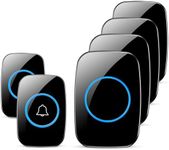
Wireless Doorbell IP66 Waterproof 1000 Feet with 56 Chimes 115dB 7 volume levels Mute Mode with LED Flash Doorbell Ringer Wireless for Kids Room Teachers Classroom Home Office & Hearing-Impaired

View on Amazon
#5
Wireless Doorbell 1200Ft Door Bells

Jsieem

Wireless Doorbell 1200Ft Door Bells for Home with Flashing Light Hearing Impaired Door bell 1 Battery Button & 3 Plug in Receivers for Home Classroom Room Office

View on Amazon
#6
CallToU Hearing Impaired Doorbell 1

CallToU

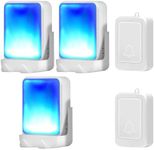
CallToU Hearing Impaired Doorbell 1000ft Wireless Doorbells for Home Waterproof Portable for Alert Patient Elderly Senior With Vibrating Flashing Light Smart Call Button System, 4 Modes
View on Amazon
#7
Loud Flash Doorbell with 7 Colors o

ZOUXO

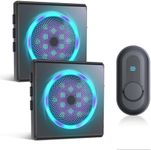
Loud Flash Doorbell with 7 Colors of Bright Light and 4 Volumes, Wireless Doorbells 600 feet,at Home/Office,Suitable for the Elderly, Hearing Impaired People, 2 Transmitters with 3 Receivers
View on Amazon
#8
CallToU Hearing Impaired Doorbell w

CallToU

CallToU Hearing Impaired Doorbell with Strobe Light & 55 Melodies, 1000ft Long Range Wireless Door Bell for Elderly/Senior Adjustable Volume, IPX5 Waterproof Call Button 1 + Plug-in Receivers 2

View on Amazon
#9
Wireless Doorbell 1200 feet Waterpr

Jsieem

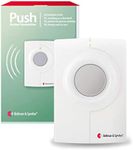
Wireless Doorbell 1200 feet Waterproof Door Bell with Flash LED Light 36 Melodies 4 Volume Levels (2 Receivers& 1 Touch Button, White JSIEEM)
View on Amazon
#10
Bellman & Symfon Push Button Transm

Bellman & Symfon

Bellman & Symfon Push Button Transmitter for Visit Home Alerting System – Doorbell Detector or Personal Alarm for Hard of Hearing and Deaf - Easy to Use Wireless Smart Home Safety Alarm
View on Amazon
How do we rank products for you?

Our technology thoroughly searches through the online shopping world, reviewing hundreds of sites. We then process and analyze this information, updating in real-time to bring you the latest top-rated products. This way, you always get the best and most current options available.

headphones-stars

Most Popular Categories Right Now

Buying Guide for the Best Hearing Impaired Doorbell

Choosing the right doorbell for someone who is hearing-impaired involves considering features that ensure they can be alerted effectively when someone is at the door. The key is to look for doorbells that offer alternative alert methods beyond sound, such as visual or tactile notifications. Here are some important specifications to consider when selecting a hearing-impaired doorbell, along with explanations to help you understand their importance and how to choose the best fit for your needs.
Visual AlertsVisual alerts are crucial for hearing-impaired individuals as they provide a clear indication that someone is at the door. These alerts typically come in the form of flashing lights. When choosing a doorbell, consider the brightness and color of the lights. Bright, multi-colored lights are more noticeable and can be seen from a distance, making them ideal for larger homes or areas with a lot of natural light. If the doorbell will be used in a smaller or dimly lit area, a less intense light might suffice. Think about where the doorbell will be placed and how easily the visual alert can be seen from different parts of the home.
Vibration AlertsVibration alerts are another effective way to notify someone who is hearing-impaired. These alerts can be delivered through a wearable device, like a wristband, or a portable receiver that can be carried around the house. When evaluating vibration alerts, consider the strength and pattern of the vibrations. Stronger, more distinct vibrations are easier to notice, especially in busy or noisy environments. If the user prefers a more subtle alert, a gentler vibration might be more appropriate. Think about the user's daily routine and how they might prefer to be alerted.
RangeThe range of the doorbell system is important to ensure that alerts can be received throughout the home. This is the maximum distance between the doorbell button and the receiver. For larger homes or homes with thick walls, a longer range is necessary to ensure reliable alerts. Typical ranges can vary from 100 feet to over 1000 feet. Consider the size of the home and any potential obstacles that might interfere with the signal when choosing the range. If the home is small or the doorbell will be used in a specific area, a shorter range might be sufficient.
PortabilityPortability refers to how easily the doorbell receiver can be moved around the home. Portable receivers allow the user to carry the alert device with them, ensuring they don't miss a visitor when they move from room to room. Some systems come with multiple receivers that can be placed in different rooms. When considering portability, think about the user's lifestyle and how often they move around the house. If they spend most of their time in one area, a stationary receiver might be enough. For more active users, a portable or multiple-receiver system would be more suitable.
Ease of InstallationEase of installation is important to ensure that the doorbell can be set up quickly and without professional help. Some doorbells are wireless and can be installed with adhesive strips or screws, while others might require more complex wiring. Wireless systems are generally easier to install and more flexible in terms of placement. Consider the user's technical skills and whether they have someone to help with installation. If simplicity is key, opt for a wireless system with straightforward instructions.