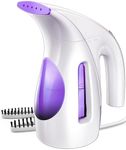
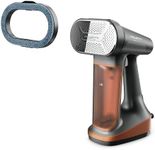
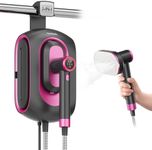
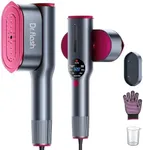
Buying Guide for the Best Handheld Steamers For Clothes
Choosing the best handheld steamer for your clothes is all about matching your needs to the right set of features. Start by considering how you’ll use the steamer: do you travel frequently? Will you use it for quick touch-ups or for smoothing out larger garments and fabrics? Considering how often and where you want to steam clothes will help prioritize which specs matter most. Handheld steamers can help refresh and de-wrinkle clothing easily, but each model offers different performance levels, ease of use, and portability. Learning about the key specs below will help you pick a steamer that fits into your routine and delivers just the results you want.Water Tank CapacityWater tank capacity refers to how much water the steamer can hold at once, which determines how long it can produce steam before needing a refill. A smaller tank makes the steamer lighter and more compact, ideal for travel or quick steaming jobs, but you’ll need to refill it more often. A larger tank will let you steam more clothes in one go, which suits situations like steaming a whole outfit or regular use at home. If you need to steam just a shirt occasionally, a compact tank is fine. For bulk steaming or handling heavier fabrics, a larger water tank provides more convenience.
Steam OutputSteam output describes how much steam the device produces within a given time. This affects how effectively it removes wrinkles and how quickly it works. Lower steam output is gentle and works well for delicate fabrics, but may struggle with heavy wrinkles. Higher steam output tackles tough creases and thicker materials but is less suited for delicate garments. If your wardrobe is mostly made of lightweight or fragile fabrics, go for a moderate-to-low steam output, but if you need to de-wrinkle heavy clothes like jeans or jackets, look for a model with higher steam output.
Heat-up TimeHeat-up time is how long the steamer takes to start producing steam after you turn it on. Fast heat-up times are handy if you’re often in a hurry or just want quick touch-ups before heading out. Longer heat-up times aren’t a big issue if you usually plan to steam several garments at once. If you value speed and convenience, a steamer with rapid heat-up is best, while those who steam in batches can manage with slightly slower heat-up models.
Weight and ErgonomicsThe weight and overall design of the steamer affect how comfortable it is to hold and use. Lighter models are easier to maneuver, great for travel or for users who steam often and don’t want to tire their arm. Some steamers have ergonomically shaped handles which make extended use more comfortable. If you plan to take your steamer on the go or use it frequently, prioritize lighter models with comfortable grips. For home-only use with occasional longer sessions, medium-weight with ergonomic design works well.
Cord Length and Cordless OperationCord length determines how easily you can move around while steaming, especially if your power outlets aren’t close to where you hang your clothes. Longer cords offer more flexibility. Some steamers have a cordless design, powered by rechargeable batteries, which is great for maximum portability and convenience but may offer shorter operating times. If you usually steam near an outlet, cord length may not matter, but if you value mobility or want to steam without plugging in, look for cordless options or steamers with longer cords.
Compatibility with Different FabricsNot all steamers are suited for every type of fabric. Some work well only on light, delicate materials, while others can handle thicker items like curtains, upholstery, or heavy garments. If you'll use the steamer for varied fabrics, check that the model is designed for versatile use—often indicated in the product’s description. If you mostly wear cotton or synthetic blends, almost any steamer will work; but for silk, wool, or velvet, make sure your chosen device is gentle enough or has fabric-specific settings.