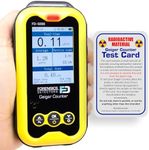
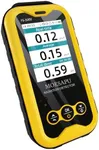
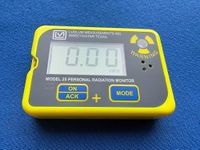
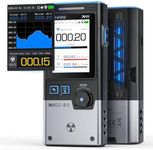
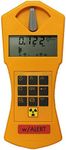
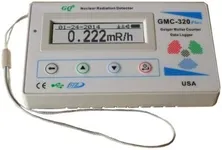
Buying Guide for the Best Handheld Radiation Detectors
Choosing the right handheld radiation detector can be crucial for ensuring safety and accuracy in detecting radiation levels. These devices are used in various fields such as medical, industrial, environmental monitoring, and emergency response. To make an informed decision, it's important to understand the key specifications and how they align with your specific needs. Here are the main factors to consider when selecting a handheld radiation detector.Detector TypeThe detector type refers to the technology used to detect radiation. Common types include Geiger-Müller (GM) tubes, scintillation detectors, and semiconductor detectors. GM tubes are widely used for general radiation detection and are good for detecting beta and gamma radiation. Scintillation detectors are more sensitive and can detect lower levels of radiation, making them suitable for medical and environmental applications. Semiconductor detectors offer high precision and are often used in scientific research. Choose the detector type based on the sensitivity and specificity required for your application.
Radiation Types DetectedDifferent detectors are designed to detect various types of radiation, such as alpha, beta, gamma, and neutron radiation. It's important to know which types of radiation you need to monitor. For example, if you are working in a medical setting, gamma radiation detection might be crucial. In contrast, industrial applications might require detection of alpha and beta particles. Ensure the detector you choose can accurately detect the specific types of radiation relevant to your needs.
Measurement RangeThe measurement range indicates the levels of radiation the detector can measure, usually expressed in units like microsieverts per hour (µSv/h) or millirems per hour (mR/h). A wider measurement range allows the detector to be used in various environments, from low-level background radiation to high-level radiation areas. For general use, a detector with a range of 0.1 µSv/h to 1,000 µSv/h might be sufficient. For more specialized applications, such as nuclear power plants, a higher range might be necessary. Consider the typical radiation levels you expect to encounter and choose a detector with an appropriate range.
SensitivitySensitivity refers to the detector's ability to detect low levels of radiation. Higher sensitivity is important in environments where radiation levels are expected to be very low, such as environmental monitoring or medical diagnostics. Sensitivity is often indicated by the lowest detectable level of radiation, with more sensitive detectors being able to detect smaller amounts. If you need to detect minute traces of radiation, opt for a detector with high sensitivity.
Response TimeResponse time is the time it takes for the detector to provide a reading after exposure to radiation. Faster response times are crucial in situations where immediate readings are necessary, such as emergency response or real-time monitoring. Response times can vary from a few seconds to several minutes. For applications requiring quick decision-making, choose a detector with a fast response time.
Display and User InterfaceThe display and user interface determine how easy it is to read and interpret the data from the detector. Look for detectors with clear, easy-to-read displays, and intuitive controls. Some detectors offer digital displays with backlighting for use in low-light conditions, while others might have analog meters. Consider your working environment and choose a detector with a user interface that suits your needs, ensuring that you can quickly and accurately read the measurements.
Durability and PortabilityDurability and portability are important factors, especially if you need to use the detector in various locations or harsh environments. Look for detectors that are rugged, water-resistant, and can withstand drops or rough handling. Portability is also key, so consider the size and weight of the detector. A lightweight, compact detector is easier to carry around and use in the field. Choose a detector that balances durability and portability based on your specific use case.
Battery LifeBattery life determines how long the detector can operate before needing a recharge or battery replacement. Longer battery life is essential for extended use in the field or in situations where recharging might not be possible. Some detectors offer rechargeable batteries, while others use standard replaceable batteries. Consider how long you need the detector to operate on a single charge and choose a model with sufficient battery life to meet your needs.