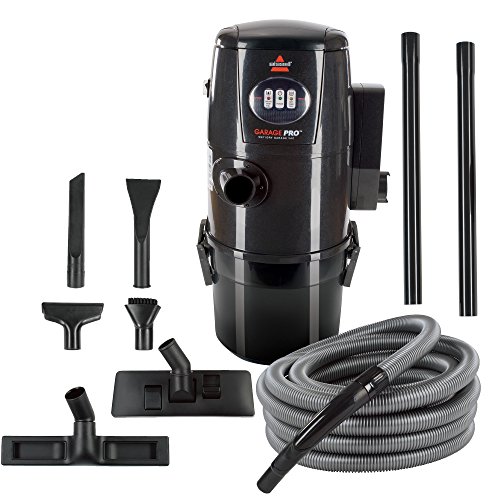
Buying Guide for the Best Garage Vacuum Wall Mounted
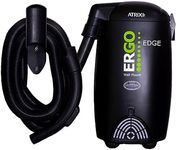
Choosing the right wall-mounted garage vacuum can make a significant difference in maintaining a clean and organized garage space. These vacuums are designed to be mounted on the wall, saving floor space and providing powerful suction to handle various types of debris. When selecting a garage vacuum, it's important to consider several key specifications to ensure it meets your cleaning needs and fits well within your garage setup.Suction PowerSuction power is a measure of how effectively the vacuum can pick up dirt and debris. It is usually measured in air watts or CFM (cubic feet per minute). Higher suction power means the vacuum can handle heavier and larger debris more efficiently. For light cleaning tasks, a vacuum with lower suction power may suffice, but for heavy-duty cleaning, such as picking up sawdust, nails, or larger debris, a higher suction power is recommended.
Tank CapacityTank capacity refers to the amount of debris the vacuum can hold before it needs to be emptied. This is typically measured in gallons. A larger tank capacity means you can clean for longer periods without needing to stop and empty the tank. If you have a large garage or frequently perform extensive cleaning tasks, a vacuum with a larger tank capacity will be more convenient. For smaller garages or occasional use, a smaller tank capacity may be sufficient.
Filtration SystemThe filtration system determines how well the vacuum can trap dust and allergens. High-efficiency particulate air (HEPA) filters are the gold standard, capturing 99.97% of particles as small as 0.3 microns. If you or anyone in your household has allergies or asthma, a vacuum with a HEPA filter is highly recommended. For general cleaning, a standard filter may be adequate, but ensure it can handle the type of debris you typically encounter.
Hose LengthHose length affects the reach of the vacuum. A longer hose allows you to clean larger areas without needing to move the vacuum unit. This is particularly useful in larger garages or when cleaning vehicles. However, longer hoses can be more cumbersome to store. Consider the size of your garage and the typical cleaning tasks you perform to determine the ideal hose length for your needs.
Mounting and InstallationMounting and installation refer to how the vacuum is attached to the wall and how easy it is to set up. Some models come with detailed instructions and all necessary hardware, making installation straightforward. Others may require additional tools or professional installation. Ensure the vacuum you choose can be securely mounted on your garage wall and that the installation process is within your capability or budget for professional help.
Noise LevelNoise level is an important consideration, especially if you will be using the vacuum frequently or for extended periods. Noise levels are measured in decibels (dB). Lower decibel levels indicate quieter operation. If you are sensitive to noise or have close neighbors, look for a vacuum with a lower noise level. For occasional use or if noise is not a concern, this may be less of a priority.
Accessories and AttachmentsAccessories and attachments can enhance the versatility of your garage vacuum. Common attachments include crevice tools, brush nozzles, and extension wands. These can help you clean different surfaces and reach tight spaces more effectively. Consider the types of cleaning tasks you will be performing and choose a vacuum that comes with the appropriate accessories or has the option to purchase them separately.