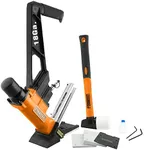
Buying Guide for the Best Flooring Air Nailers
Choosing the right flooring air nailer can make your flooring installation project much easier and more efficient. Flooring air nailers are specialized tools designed to drive nails or staples into hardwood flooring, ensuring a secure and professional finish. When selecting a flooring air nailer, it's important to consider several key specifications to ensure you get the best tool for your needs. Understanding these specifications will help you make an informed decision and choose a nailer that matches your project requirements and personal preferences.Type of FastenerFlooring air nailers can use either nails or staples to secure the flooring. Nails are typically used for hardwood floors, while staples can be used for both hardwood and engineered wood. The choice between nails and staples depends on the type of flooring you are installing and the manufacturer's recommendations. If you are working with traditional hardwood, nails might be the better option for a more secure hold. For engineered wood or softer woods, staples can provide a strong grip without splitting the material.
GaugeThe gauge of the fastener refers to its thickness. Common gauges for flooring air nailers are 15-gauge and 16-gauge. A lower gauge number means a thicker fastener, which can provide a stronger hold. For most hardwood flooring projects, a 15-gauge nailer is suitable as it offers a robust hold. However, for thinner or more delicate flooring materials, a 16-gauge nailer might be preferable to avoid damaging the wood. Consider the type of flooring and the level of hold you need when choosing the gauge.
Magazine CapacityThe magazine capacity indicates how many nails or staples the nailer can hold at one time. A larger magazine capacity means fewer reloads, which can save time and increase efficiency during your project. If you are working on a large flooring installation, a nailer with a high magazine capacity will be beneficial. For smaller projects or occasional use, a standard capacity may suffice. Think about the scale of your project and how often you want to stop to reload when selecting the magazine capacity.
Operating PressureFlooring air nailers require a certain amount of air pressure to operate effectively, usually measured in pounds per square inch (PSI). Most flooring nailers operate within a range of 70-120 PSI. It's important to ensure that your air compressor can provide the necessary pressure for the nailer. If you already have an air compressor, check its specifications to match it with the nailer's requirements. For consistent performance, choose a nailer that operates within the pressure range your compressor can handle.
Weight and ErgonomicsThe weight and ergonomics of the flooring air nailer can significantly impact your comfort and ease of use, especially during long projects. A lighter nailer can reduce fatigue, while ergonomic designs with comfortable grips can make handling the tool easier. If you plan to use the nailer for extended periods, prioritize models that are lightweight and have ergonomic features. Test the tool if possible to ensure it feels comfortable in your hands and is easy to maneuver.
Depth AdjustmentDepth adjustment allows you to control how deep the nails or staples are driven into the flooring. This feature is important for achieving a professional finish and preventing damage to the flooring material. Look for a nailer with easy-to-use depth adjustment settings so you can quickly adapt to different flooring thicknesses and materials. If you are working with various types of flooring, having precise control over the depth can help you achieve consistent results.