Buying Guide for the Best Elliptical Trainers
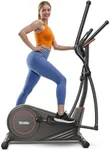
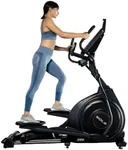
Choosing the right elliptical trainer can significantly enhance your workout experience and help you achieve your fitness goals. Elliptical trainers are popular for their low-impact, full-body workouts that are gentle on the joints. When selecting an elliptical trainer, it's important to consider several key specifications to ensure you find the best fit for your needs. Understanding these specifications will help you make an informed decision and get the most out of your investment.Stride LengthStride length refers to the distance between the pedals when they are at their farthest apart. This spec is important because it affects the comfort and effectiveness of your workout. Stride lengths typically range from 14 to 22 inches. Shorter stride lengths (14-18 inches) are suitable for shorter individuals or those with limited space, while longer stride lengths (18-22 inches) are better for taller users or those seeking a more natural running motion. Choose a stride length that matches your height and workout preference.
Resistance LevelsResistance levels indicate how much effort is required to pedal the elliptical. This spec is crucial for adjusting the intensity of your workouts. Elliptical trainers usually offer between 8 to 25 resistance levels. Lower resistance levels (8-12) are ideal for beginners or those focusing on light cardio, while higher resistance levels (16-25) are better for advanced users or those aiming for strength training. Select a trainer with a range of resistance levels that align with your fitness goals and allow for progression.
Flywheel WeightThe flywheel weight affects the smoothness and stability of the elliptical motion. Heavier flywheels (18-30 pounds) provide a smoother and more stable ride, which is important for a comfortable workout experience. Lighter flywheels (10-18 pounds) may be suitable for beginners or those with limited space, but they might not offer the same level of smoothness. Consider your workout intensity and preference for stability when choosing the flywheel weight.
Incline OptionsIncline options allow you to adjust the slope of the elliptical path, simulating uphill workouts and targeting different muscle groups. This spec is important for adding variety and challenge to your workouts. Some ellipticals offer manual incline adjustments, while others have motorized inclines that can be changed with the push of a button. If you want to diversify your workouts and engage more muscles, look for a trainer with adjustable incline options.
Console FeaturesThe console features include the display and controls that provide workout feedback and entertainment options. This spec is important for tracking your progress and staying motivated. Basic consoles offer essential metrics like time, distance, speed, and calories burned, while advanced consoles may include heart rate monitoring, preset workout programs, Bluetooth connectivity, and media options. Choose a console that provides the features you need to stay engaged and monitor your fitness progress.
Weight CapacityWeight capacity refers to the maximum user weight that the elliptical can safely support. This spec is important for ensuring the durability and safety of the machine. Elliptical trainers typically have weight capacities ranging from 250 to 400 pounds. Select a trainer with a weight capacity that exceeds your body weight to ensure stability and longevity.
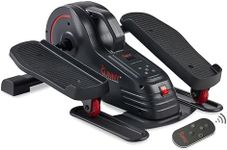
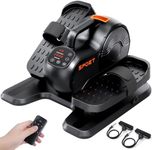
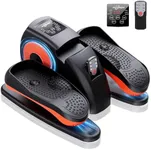
Footprint and PortabilityThe footprint is the amount of space the elliptical occupies, and portability refers to how easy it is to move the machine. These specs are important for fitting the elliptical into your available space and for storage. Compact ellipticals are ideal for small spaces, while larger models may offer more features but require more room. If you need to move the elliptical frequently, look for models with transport wheels. Consider your space constraints and need for portability when choosing an elliptical.