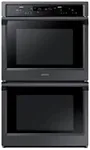
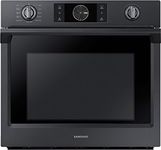
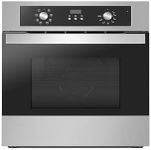
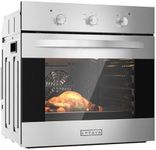
Buying Guide for the Best Electric Built In Oven
Choosing the right electric built-in oven can significantly enhance your cooking experience. It's important to consider various specifications to ensure the oven meets your cooking needs and fits well in your kitchen. Here are some key specifications to consider and how to navigate them to find the best fit for you.CapacityCapacity refers to the amount of space inside the oven, usually measured in liters. This is important because it determines how much food you can cook at once. Smaller ovens (around 40-60 liters) are suitable for small households or those who don't cook large meals often. Medium-sized ovens (60-80 liters) are ideal for average families, while larger ovens (80+ liters) are great for big families or those who entertain frequently. Consider your cooking habits and the size of your household when choosing the capacity.
Cooking FunctionsCooking functions are the different modes and settings an oven offers, such as baking, grilling, roasting, and convection. These functions are important because they provide versatility and can enhance your cooking results. Basic models may offer a few essential functions, while advanced models can have a wide range of specialized settings. Think about the types of dishes you cook most often and choose an oven with functions that will make your cooking easier and more efficient.
Energy EfficiencyEnergy efficiency is indicated by an energy rating, usually from A+++ to D. This spec is important because it affects your electricity consumption and utility bills. Higher ratings (A+++, A++, A+) mean the oven uses less energy, which is better for the environment and your wallet. If you use your oven frequently, investing in a more energy-efficient model can lead to significant savings over time. Consider how often you cook and your commitment to energy conservation when evaluating this spec.
Cleaning FeaturesCleaning features refer to the technologies that make it easier to clean the oven, such as self-cleaning, pyrolytic cleaning, or steam cleaning. This is important because it saves time and effort in maintaining your oven. Self-cleaning ovens use high temperatures to burn off residues, while steam cleaning uses water to loosen grime. If you prefer low-maintenance appliances, look for models with advanced cleaning features. Consider how much time you want to spend on cleaning and choose accordingly.
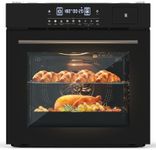
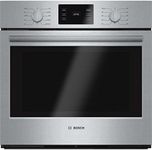
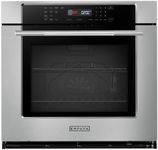
Control TypeControl type refers to how you operate the oven, such as through knobs, touch controls, or digital displays. This is important for ease of use and precision in setting temperatures and cooking times. Knobs are straightforward and durable, touch controls offer a modern look and precise settings, and digital displays provide clear information and advanced programming options. Think about your preference for simplicity versus advanced features and choose a control type that suits your style.
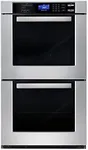
Size and InstallationSize and installation refer to the dimensions of the oven and how it fits into your kitchen space. This is important to ensure the oven fits properly in the designated area and aligns with your kitchen design. Built-in ovens come in standard sizes, but it's crucial to measure your space accurately and consider the installation requirements. If you have a compact kitchen, look for models designed for smaller spaces. Consider your kitchen layout and the available space when choosing the size and installation type.