Buying Guide for the Best Draw Knife
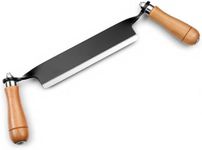
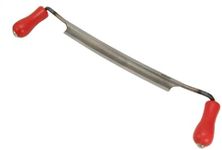
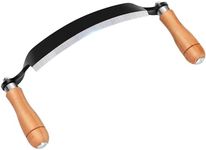
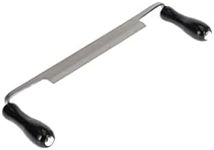
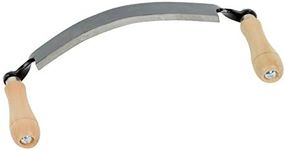
Choosing the right draw knife can make a significant difference in your woodworking projects. A draw knife is a traditional woodworking hand tool used to shape wood by removing shavings. It consists of a blade with handles at both ends. The key to selecting the best draw knife for your needs is understanding the various specifications and how they impact performance. Here are the key specs to consider when choosing a draw knife and how to navigate them.Blade LengthThe blade length of a draw knife determines how much wood you can remove in one pass. Shorter blades (6-8 inches) offer more control and are ideal for detailed work or smaller projects. Medium blades (8-10 inches) provide a balance between control and efficiency, suitable for general woodworking tasks. Longer blades (10-14 inches) are best for larger projects where you need to remove a lot of material quickly. Choose a blade length based on the size and type of your projects.
Blade MaterialThe material of the blade affects its durability and sharpness. High-carbon steel blades are very sharp and hold an edge well, making them ideal for precision work. Stainless steel blades are more resistant to rust and require less maintenance, but they may not hold an edge as long as high-carbon steel. Consider the type of wood you will be working with and how often you are willing to sharpen the blade when choosing the material.
Blade BevelThe bevel of the blade refers to the angle at which the edge is sharpened. A single bevel blade has one side flat and the other side angled, which is good for controlled, precise cuts. A double bevel blade has both sides angled, making it more versatile for different types of cuts. If you are a beginner, a single bevel blade might be easier to control, while experienced users might prefer the versatility of a double bevel blade.
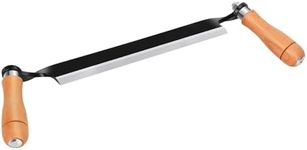
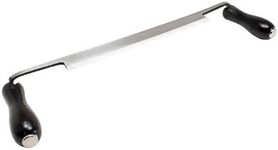
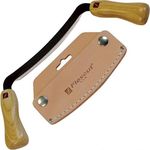
Handle DesignThe design of the handles affects comfort and control. Straight handles provide a traditional grip and are good for general use. Curved handles can offer better ergonomics and reduce hand fatigue during extended use. Some handles are designed with a slight angle to provide more leverage. Consider how the tool feels in your hands and how long you will be using it when choosing the handle design.
Handle MaterialThe material of the handles can impact comfort and durability. Wooden handles are traditional and provide a good grip, but they may require more maintenance. Plastic or composite handles are more durable and resistant to moisture, but they may not offer the same level of comfort. Choose a handle material that feels comfortable in your hands and suits the working conditions you will be in.
WeightThe weight of the draw knife can affect how easy it is to use. Lighter draw knives are easier to control and less tiring to use for extended periods, making them suitable for detailed work. Heavier draw knives can remove more material quickly but may be harder to control. Consider the type of work you will be doing and your own strength and stamina when choosing the weight of the draw knife.