Buying Guide for the Best Diesel Oils
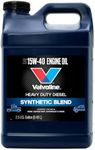
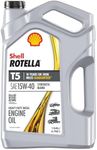
Choosing the right diesel oil for your vehicle is crucial for maintaining engine performance, longevity, and efficiency. Diesel engines have specific lubrication needs due to their high compression ratios and operating temperatures. Understanding the key specifications of diesel oils will help you make an informed decision that best suits your vehicle's requirements and driving conditions.ViscosityViscosity refers to the thickness of the oil and its ability to flow at different temperatures. It is important because it affects how well the oil can lubricate engine parts under various operating conditions. Viscosity is usually indicated by a number followed by 'W' (winter) and another number (e.g., 15W-40). Lower numbers mean the oil is thinner and flows more easily at low temperatures, which is good for cold starts. Higher numbers indicate thicker oil that performs better at high temperatures. For most diesel engines, a multi-grade oil like 15W-40 is a good choice, but always refer to your vehicle's manual for the recommended viscosity.
API RatingThe American Petroleum Institute (API) rating indicates the quality and performance standards of the oil. It is important because it ensures the oil meets specific requirements for engine protection and performance. API ratings for diesel oils typically start with 'C' (e.g., CJ-4, CK-4). Higher letters and numbers generally indicate more recent and stringent standards. Choose an oil with an API rating that meets or exceeds the recommendation in your vehicle's manual to ensure optimal engine protection.
Synthetic vs. ConventionalSynthetic oils are chemically engineered to provide superior performance and protection compared to conventional oils, which are refined from crude oil. This spec is important because synthetic oils offer better high-temperature stability, lower volatility, and improved cold-start performance. If you drive in extreme temperatures, tow heavy loads, or want extended oil change intervals, synthetic oil may be the better choice. Conventional oil is typically sufficient for standard driving conditions and is more cost-effective. Consider your driving habits and conditions when choosing between synthetic and conventional oil.
AdditivesAdditives are chemical compounds added to the oil to enhance its performance and protect the engine. They are important because they can improve lubrication, reduce wear, prevent corrosion, and keep the engine clean. Common additives include detergents, dispersants, anti-wear agents, and antioxidants. When choosing diesel oil, look for one with a well-balanced additive package that matches your engine's needs. High-quality oils will often list the types of additives they contain, so you can select one that offers the best protection for your driving conditions.
OEM ApprovalsOriginal Equipment Manufacturer (OEM) approvals are certifications from vehicle manufacturers that the oil meets their specific standards. This spec is important because it ensures the oil is tested and approved for use in your particular engine. OEM approvals are usually listed on the oil container and can include certifications from manufacturers like Ford, GM, or Mercedes-Benz. Always check your vehicle's manual for any required OEM approvals and choose an oil that meets those standards to maintain your engine's warranty and performance.