Buying Guide for the Best DeWalt Oscillating Tools
When choosing a DeWalt oscillating tool, it's important to consider several key specifications to ensure you select the best fit for your needs. Oscillating tools are versatile and can be used for a variety of tasks such as cutting, sanding, scraping, and grinding. Understanding the key specs will help you make an informed decision based on your specific requirements and the type of projects you plan to undertake.Power SourceThe power source of an oscillating tool can be either corded or cordless. Corded tools are typically more powerful and provide a constant power supply, making them ideal for heavy-duty tasks and prolonged use. Cordless tools offer greater mobility and convenience, especially in areas without easy access to power outlets. If you need a tool for extensive, continuous work, a corded model might be best. For smaller, quick jobs or if you need to move around a lot, a cordless model would be more suitable.
Motor PowerMotor power is measured in amps for corded tools and volts for cordless tools. Higher motor power means the tool can handle tougher materials and more demanding tasks. For light to medium tasks like sanding or cutting soft materials, a lower power motor (around 2-3 amps or 12-18 volts) is sufficient. For heavy-duty tasks like cutting through metal or hardwood, look for a higher power motor (above 3 amps or 20 volts). Choose the motor power based on the intensity and frequency of the tasks you plan to perform.
Oscillation SpeedOscillation speed, measured in oscillations per minute (OPM), determines how fast the tool's blade or attachment moves. Variable speed settings allow you to adjust the speed based on the material and task. Lower speeds (around 10,000-15,000 OPM) are suitable for delicate tasks and softer materials, while higher speeds (up to 20,000 OPM or more) are better for tougher materials and faster cutting. If you need versatility for different tasks, a tool with variable speed settings is ideal.
Tool-Free Blade ChangeA tool-free blade change system allows you to quickly and easily swap out attachments without the need for additional tools. This feature is important for efficiency and convenience, especially if you frequently switch between different tasks. If you plan to use the oscillating tool for various applications, look for a model with a tool-free blade change system to save time and effort.
Ergonomics and DesignThe ergonomics and design of the oscillating tool affect comfort and ease of use. Look for a tool with a comfortable grip, balanced weight, and a design that reduces vibration. These features are important for reducing fatigue during extended use and improving overall control and precision. If you anticipate using the tool for long periods, prioritize models with ergonomic designs to enhance your comfort and productivity.
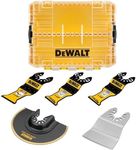
Accessories and AttachmentsOscillating tools can be used with a variety of accessories and attachments for different tasks. Some models come with a range of accessories, while others may require you to purchase them separately. Consider the types of projects you will be working on and ensure the tool is compatible with the necessary attachments. Having a good selection of accessories can greatly expand the versatility and functionality of your oscillating tool.