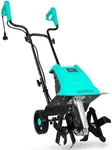
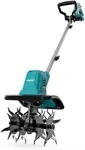
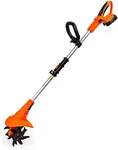
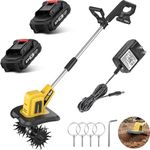
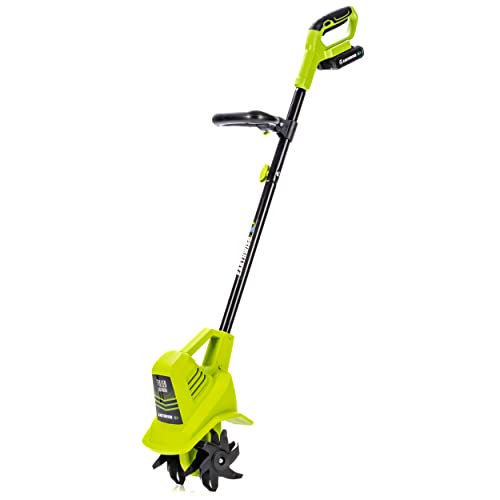
Buying Guide for the Best Cordless Rototiller
Choosing the right cordless rototiller can make a significant difference in your gardening experience. A rototiller helps in breaking up and aerating the soil, making it easier to plant and grow your garden. When selecting a cordless rototiller, it's important to consider several key specifications to ensure you get a model that fits your needs and gardening style. Here are the main specs to look at and how to choose the best one for you.Battery LifeBattery life determines how long the rototiller can operate on a single charge. This is crucial because it affects how much work you can get done without needing to recharge. Battery life is usually measured in ampere-hours (Ah). For small gardens or light tilling, a battery with 2-3 Ah might be sufficient. For larger gardens or more intensive work, look for batteries with 4 Ah or more. Consider your garden size and how long you typically work in one session to choose the right battery life.
Tilling WidthTilling width refers to the width of the soil that the rototiller can till in one pass. This is important because it affects how quickly you can cover your garden area. Tilling widths can range from about 6 inches to over 16 inches. For small, narrow garden beds, a smaller tilling width is more maneuverable and precise. For larger areas, a wider tilling width will help you finish the job faster. Think about the size and layout of your garden to determine the best tilling width for you.
Tilling DepthTilling depth indicates how deep the rototiller can dig into the soil. This is important for preparing the soil for planting, especially if you need to break up hard or compacted soil. Tilling depths can range from a few inches to over 10 inches. For shallow-rooted plants or light soil preparation, a tilling depth of 4-6 inches may be adequate. For deeper soil preparation or root vegetables, look for a tilling depth of 8 inches or more. Consider the types of plants you will be growing and the condition of your soil when choosing the tilling depth.
WeightThe weight of the rototiller affects how easy it is to maneuver and transport. Lighter models are easier to handle, especially for smaller or less physically strong users. However, heavier models may offer more stability and better performance in tough soil conditions. Weights can vary significantly, from around 20 pounds to over 50 pounds. If you have a small garden or need to transport the tiller frequently, a lighter model may be more suitable. For larger gardens or tougher soil, a heavier model might be more effective.
Handle AdjustabilityHandle adjustability refers to the ability to change the height and angle of the handles to suit your comfort and ergonomic needs. This is important for reducing strain and fatigue during use. Adjustable handles can make the rototiller more comfortable to use for people of different heights and can help you maintain better control. If you plan to use the rototiller for extended periods or if multiple people will be using it, look for models with adjustable handles to ensure a comfortable fit for everyone.
Noise LevelNoise level is an important consideration, especially if you live in a neighborhood with noise restrictions or if you prefer a quieter gardening experience. Cordless rototillers are generally quieter than gas-powered models, but noise levels can still vary. Noise levels are usually measured in decibels (dB). For a quieter operation, look for models that specify lower decibel ratings. If noise is a concern for you, consider testing the rototiller in-store or reading user reviews to get an idea of its noise level during operation.