Buying Guide for the Best Corded Hammer Drill
Choosing the right corded hammer drill can make a significant difference in your DIY or professional projects. A hammer drill is designed to drill into hard materials like concrete, brick, and stone, making it an essential tool for construction and renovation tasks. When selecting a corded hammer drill, it's important to consider several key specifications to ensure you get the best fit for your needs. Understanding these specs will help you make an informed decision and choose a drill that will perform well for your specific applications.Power (Amps)Power, measured in amps, indicates the electrical current the drill uses. Higher amperage means more power, which is crucial for heavy-duty tasks like drilling into concrete or masonry. For light to medium tasks, a drill with 5-8 amps should suffice. For more demanding jobs, consider a drill with 8-10 amps or higher. Your choice should depend on the type of projects you plan to undertake; more power is better for tougher materials.
Speed (RPM)Speed, measured in revolutions per minute (RPM), determines how fast the drill bit spins. Variable speed settings allow you to adjust the speed based on the material you're working with. Lower speeds are better for drilling into hard materials, while higher speeds are suitable for softer materials. Look for a drill with adjustable speed settings to give you flexibility in different tasks. If you need precision and control, variable speed is a key feature.
Hammering Action (BPM)Hammering action, measured in blows per minute (BPM), refers to the number of times the drill's hammer mechanism strikes the material per minute. Higher BPM means more efficient drilling into hard surfaces. For general use, a BPM of around 20,000 is adequate, but for heavy-duty applications, look for a drill with 30,000 BPM or more. Consider the type of materials you'll be working with; higher BPM is better for tougher materials.
Chuck SizeThe chuck size determines the maximum diameter of the drill bit that can be used. Common sizes are 1/2 inch and 3/8 inch. A larger chuck size allows for bigger bits, which is useful for heavy-duty drilling. For general home use, a 3/8 inch chuck is usually sufficient. If you plan to use larger bits for more demanding tasks, opt for a 1/2 inch chuck. Your choice should be based on the types of bits you need for your projects.
WeightThe weight of the drill affects how comfortable it is to use, especially for extended periods. Lighter drills are easier to handle and reduce fatigue, but heavier drills often offer more power and durability. If you need a drill for occasional use or lighter tasks, a lighter model may be preferable. For frequent use or heavy-duty tasks, a heavier drill might be more suitable despite the added weight. Consider how long you'll be using the drill and the type of work you'll be doing.
Cord LengthCord length determines how far you can move from the power source while using the drill. A longer cord provides more flexibility and reduces the need for extension cords. For general use, a cord length of 6-8 feet is usually sufficient. If you need to work in larger areas or away from power outlets, look for a drill with a longer cord. Your choice should depend on your workspace and how mobile you need to be while drilling.
ErgonomicsErgonomics refers to how comfortable and easy the drill is to use. Features like a soft grip handle, balanced weight distribution, and easy-to-reach controls can make a big difference in user comfort. If you plan to use the drill for extended periods, look for ergonomic designs that reduce strain and fatigue. Consider how the drill feels in your hand and whether the controls are intuitive and accessible.
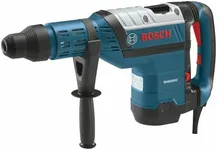
![[Upgraded] 12.3 Amp Rotary Hammer Drill, 1-1/4 Inch SDS-Plus 4 in 1 Multi-functional Heavy Duty hammer drill, Safety Clutch, Drill Chuck, for Concrete, Tile, Wall, Stones, Cement and Metal](https://images-proxy.bestreviews.guide/6fszEfCOWXx19Dijk3TWYQmVlDg=/0x150/https://m.media-amazon.com/images/I/516tUZ7zj6L._AC_CX679_.jpg)