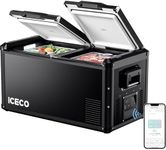
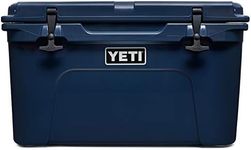
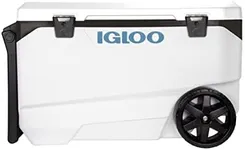
Buying Guide for the Best Coolers That Keep Ice For Days
When it comes to choosing a cooler that keeps ice for days, it's important to consider several key specifications that will ensure you get the best performance for your needs. Coolers come in various sizes, materials, and designs, each affecting their ability to retain ice. Understanding these specifications will help you make an informed decision and select a cooler that meets your requirements, whether you're planning a weekend camping trip, a long road trip, or just need a reliable cooler for daily use.InsulationInsulation is the material and design used to keep the cooler's contents cold. High-quality insulation is crucial because it determines how long the cooler can retain ice. Generally, coolers with thicker walls and lids have better insulation. Look for coolers with at least 2 inches of insulation for optimal ice retention. If you need a cooler for extended trips or hot climates, prioritize models with superior insulation.
Seal/GasketThe seal or gasket is the rubber lining around the lid that ensures an airtight closure. A good seal prevents warm air from entering and cold air from escaping, which is essential for maintaining low temperatures inside the cooler. Check for a durable, high-quality gasket that creates a tight seal when the lid is closed. If you plan to use the cooler in extreme conditions, a robust seal is even more important.
MaterialCoolers are typically made from plastic, metal, or a combination of both. The material affects durability, weight, and ice retention. Rotomolded plastic coolers are known for their excellent insulation and durability, making them ideal for long-term ice retention. Metal coolers can also be effective but may be heavier. Choose a material based on your need for durability and how often you'll be transporting the cooler.
Size/CapacityThe size or capacity of a cooler is measured in quarts or liters and determines how much you can store inside. Larger coolers generally retain ice longer because they have more thermal mass. However, they are also bulkier and heavier. Consider how much storage space you need and how portable the cooler needs to be. For short trips or small gatherings, a smaller cooler may suffice, while longer trips or larger groups may require a bigger capacity.
Drainage SystemA drainage system allows you to easily remove melted ice water from the cooler. This feature is important for maintaining a dry interior and preventing the cooler from becoming too heavy. Look for coolers with a well-designed drainage plug that is easy to open and close. If you plan to use the cooler frequently, a good drainage system will make maintenance much easier.
DurabilityDurability refers to how well the cooler can withstand rough handling and harsh conditions. A durable cooler is essential if you plan to use it in rugged environments or for outdoor activities. Check for features like reinforced corners, sturdy handles, and robust hinges. If you need a cooler for heavy-duty use, prioritize models known for their toughness and longevity.
PortabilityPortability is about how easy it is to transport the cooler. This includes the weight of the cooler when empty, the design of the handles, and whether it has wheels. If you need to move the cooler frequently or over long distances, look for lightweight models with comfortable handles or wheels. For stationary use, portability may be less of a concern.