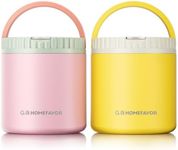
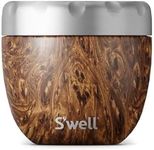
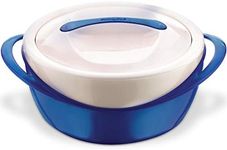
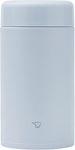
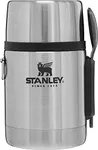
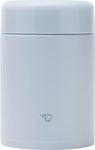
Buying Guide for the Best Containers That Keep Food Hot For Hours
When it comes to choosing containers that keep food hot for hours, it's important to consider several key specifications to ensure you get the best product for your needs. These containers are essential for maintaining the temperature of your food, whether you're packing lunch for work, school, or a picnic. Understanding the different features and how they impact performance will help you make an informed decision.Insulation TypeInsulation is the most critical feature of a container that keeps food hot. It determines how well the container can maintain the temperature of its contents. There are generally two types of insulation: vacuum insulation and foam insulation. Vacuum insulation is more effective and can keep food hot for longer periods, often up to 12 hours or more. Foam insulation is less effective but still suitable for shorter durations, typically up to 4-6 hours. If you need to keep food hot for an extended period, opt for vacuum insulation. For shorter durations, foam insulation may suffice.
MaterialThe material of the container affects its durability, weight, and heat retention capabilities. Stainless steel is a popular choice because it is durable, resistant to rust, and has excellent heat retention properties. Plastic containers are lighter and often more affordable but may not keep food hot as long as stainless steel. Glass containers are another option, offering good heat retention and being microwave-safe, but they are heavier and more fragile. Choose stainless steel for the best heat retention and durability, plastic for lightweight and short-term use, and glass if you need microwave compatibility.
CapacityCapacity refers to the amount of food the container can hold. It is usually measured in ounces or liters. Smaller containers (10-16 ounces) are ideal for individual servings or snacks, while larger containers (24-32 ounces or more) are better for full meals or sharing. Consider your typical portion sizes and how much food you need to keep hot when selecting the capacity. If you often pack large meals or share food, opt for a larger capacity. For individual use or smaller portions, a smaller container will be more convenient.
Lid DesignThe design of the lid is crucial for maintaining heat and preventing leaks. Look for lids with secure seals, such as silicone gaskets, which help to lock in heat and prevent spills. Some lids also have additional features like built-in utensils or compartments for added convenience. A screw-on lid generally provides a better seal than a snap-on lid. If you need to transport the container frequently, prioritize a lid with a secure, leak-proof design. For home use, a simpler lid may be sufficient.
Ease of CleaningEase of cleaning is an important consideration, especially if you plan to use the container frequently. Containers with wide openings are easier to clean by hand and are often dishwasher-safe. Stainless steel and glass containers are typically easier to clean than plastic, which can retain odors and stains. If convenience is a priority, look for containers that are dishwasher-safe and have simple, easy-to-clean designs. For those who don't mind hand-washing, a wider opening will make the process easier.
PortabilityPortability is key if you plan to take your container on the go. Consider the weight and size of the container, as well as any additional features like handles or carrying straps. Lightweight containers are easier to carry, but they may not keep food hot as long as heavier, more insulated options. If you need to carry the container in a bag or backpack, look for a compact design with a secure lid to prevent leaks. For those who prioritize ease of transport, a lightweight and compact container with a handle or strap is ideal.