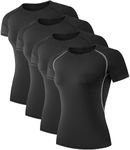
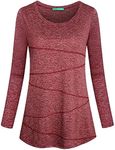
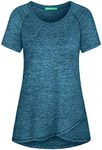
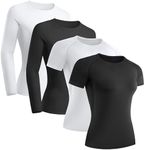
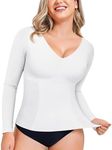
Buying Guide for the Best Compression Shirt For Women
Choosing the right compression shirt for women involves understanding how different features and specifications can impact comfort, performance, and overall satisfaction. Compression shirts are designed to provide support, improve circulation, and enhance athletic performance. To make an informed decision, consider the following key specifications and how they align with your personal needs and preferences.MaterialThe material of a compression shirt is crucial because it affects breathability, moisture-wicking ability, and overall comfort. Common materials include polyester, spandex, and nylon. Polyester is durable and moisture-wicking, making it great for intense workouts. Spandex offers excellent stretch and flexibility, ideal for activities requiring a wide range of motion. Nylon is lightweight and breathable, suitable for everyday wear or lighter activities. Choose a material based on your activity level and comfort preferences.
Compression LevelCompression level refers to how tight the shirt fits and how much pressure it applies to your muscles. Light compression is suitable for everyday wear and low-impact activities, providing gentle support. Medium compression is ideal for moderate activities, offering balanced support and comfort. High compression is best for intense workouts and athletic performance, providing maximum support and enhancing blood circulation. Select a compression level based on your activity type and desired support.
FitThe fit of a compression shirt is important for comfort and effectiveness. A snug fit ensures proper compression and support, while a looser fit may be more comfortable for casual wear. Consider your body shape and size when choosing the fit. Some brands offer tailored fits for different body types, so look for options that cater to your specific needs. Ensure the shirt is not too tight to restrict movement or too loose to lose its compression benefits.
Seam ConstructionSeam construction affects the durability and comfort of a compression shirt. Flatlock seams are designed to minimize chafing and irritation, making them ideal for prolonged wear and intense activities. Reinforced seams enhance durability, ensuring the shirt withstands frequent use and washing. Look for seamless designs if you prefer a smooth feel against your skin. Choose seam construction based on your comfort preferences and intended use.
Moisture-Wicking AbilityMoisture-wicking ability refers to how well the shirt can draw sweat away from your skin and keep you dry. This feature is essential for maintaining comfort during workouts and preventing chafing. High moisture-wicking fabrics like polyester and nylon are ideal for intense activities, while moderate moisture-wicking materials may suffice for lighter exercises. Consider your activity level and how much you sweat when choosing a shirt with the appropriate moisture-wicking ability.
UV ProtectionUV protection is an important feature if you plan to wear your compression shirt outdoors. Some shirts are designed with UV-blocking fabrics to protect your skin from harmful sun rays. This is particularly useful for outdoor sports and activities. If you spend a lot of time outside, look for shirts with a high UPF rating to ensure adequate protection. Choose UV protection based on your outdoor activity level and skin sensitivity.