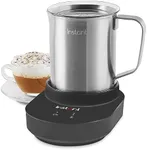
Buying Guide for the Best Coffee Frother
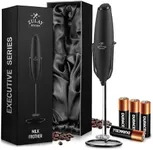
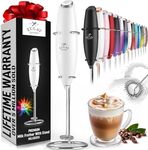
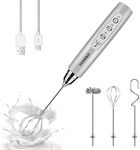
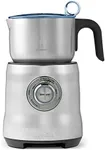
Choosing the right coffee frother can significantly enhance your coffee experience, allowing you to create barista-quality drinks at home. When selecting a coffee frother, it's important to consider several key specifications that will determine the frother's performance, ease of use, and suitability for your needs. Understanding these specifications will help you make an informed decision and ensure you get the best frother for your coffee preferences.TypeCoffee frothers come in different types, including manual, handheld electric, and automatic. Manual frothers require physical effort to pump and froth the milk, making them portable and easy to use without electricity. Handheld electric frothers are battery-operated and provide a quick and easy way to froth milk with minimal effort. Automatic frothers are more advanced and can heat and froth milk at the touch of a button. Choose a type based on your convenience, the level of effort you're willing to put in, and whether you need a portable option.
Frothing CapacityFrothing capacity refers to the amount of milk the frother can handle at one time. This is important because it determines how much frothed milk you can produce in a single use. Frothers with smaller capacities (around 100-150 ml) are suitable for single servings, while larger capacities (200-500 ml) are better for making multiple servings or larger drinks. Consider your typical usage and whether you usually make coffee for just yourself or for multiple people.
Heating FunctionSome coffee frothers come with a heating function that allows you to heat the milk while frothing it. This is important if you prefer your frothed milk to be warm, as it saves you the step of heating the milk separately. Frothers with heating functions often have temperature settings, allowing you to choose the desired warmth. If you enjoy hot lattes or cappuccinos, look for a frother with a reliable heating function.
MaterialThe material of the frother can affect its durability, ease of cleaning, and overall aesthetic. Common materials include stainless steel, plastic, and glass. Stainless steel frothers are durable and often have a sleek, modern look, but they can be heavier. Plastic frothers are lightweight and often more affordable, but they may not be as durable. Glass frothers allow you to see the frothing process, but they can be more fragile. Choose a material that fits your preferences for durability, maintenance, and style.
Ease of CleaningEase of cleaning is an important consideration, as milk residue can be difficult to remove and can affect the frother's performance over time. Some frothers have detachable parts that are dishwasher safe, making cleaning more convenient. Others may require hand washing. Consider how much time and effort you're willing to spend on cleaning and look for a frother with features that match your preferences, such as non-stick coatings or removable components.
Power SourceThe power source of a coffee frother can be either battery-operated, plug-in electric, or manual. Battery-operated frothers offer portability and convenience, making them ideal for travel or small kitchens. Plug-in electric frothers provide consistent power and are suitable for regular use at home. Manual frothers do not require any power source, making them versatile and easy to use anywhere. Choose a power source based on where and how often you plan to use the frother.