Buying Guide for the Best Chorus Pedals
Choosing the right chorus pedal can significantly enhance your guitar playing experience by adding depth and richness to your sound. A chorus pedal works by duplicating your guitar signal, slightly delaying it, and then modulating the pitch to create a shimmering, multi-layered effect. To find the best chorus pedal for your needs, it's important to understand the key specifications and how they impact the sound and usability of the pedal.Analog vs. DigitalChorus pedals come in two main types: analog and digital. Analog pedals use traditional circuitry to create their effects, often resulting in a warmer, more natural sound. Digital pedals, on the other hand, use digital signal processing to offer a wider range of sounds and more precise control. If you prefer a classic, vintage tone, an analog pedal might be the best choice. If you want more versatility and modern features, a digital pedal could be more suitable.
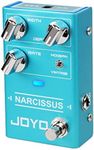
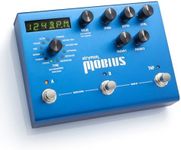
Controls and AdjustabilityThe controls on a chorus pedal typically include knobs for adjusting the rate (speed of modulation), depth (intensity of the effect), and sometimes mix (balance between the dry and wet signals). Some pedals offer additional controls like tone or EQ settings. More controls allow for greater customization of your sound, but can also make the pedal more complex to use. If you like to tweak your sound frequently, look for a pedal with more adjustability. If you prefer simplicity, a pedal with basic controls might be better.
Stereo vs. Mono OutputChorus pedals can have either mono or stereo outputs. A mono output sends a single signal to your amp, while a stereo output sends two signals, creating a wider, more immersive sound. Stereo outputs are great for creating a lush, expansive effect, especially in a live or recording setting. If you play in a band or record music, a stereo pedal might be worth considering. If you mostly play at home or don't need the extra dimension, a mono pedal will suffice.
True Bypass vs. Buffered BypassTrue bypass pedals completely remove the pedal's circuitry from your signal chain when the pedal is off, preserving your guitar's natural tone. Buffered bypass pedals, on the other hand, keep the circuitry in the signal chain, which can help maintain signal strength over long cable runs or through multiple pedals. If you have a simple setup with few pedals, true bypass might be preferable for its purity of tone. If you have a complex setup or use long cables, a buffered bypass can help prevent signal loss.
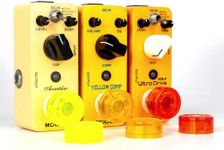
Size and Power RequirementsChorus pedals come in various sizes, from compact mini pedals to larger units with more features. Consider the available space on your pedalboard and how much room you can spare. Additionally, check the power requirements of the pedal. Most chorus pedals run on standard 9V power supplies, but some may require different voltages or have higher current demands. Make sure your power supply can accommodate the pedal you choose.