Buying Guide for the Best Cheap Welding Helmet
Choosing the right welding helmet is crucial for both safety and comfort while working. A welding helmet protects your eyes and face from the intense light, heat, and sparks produced during welding. When selecting a welding helmet, it's important to consider several key specifications to ensure you get the best fit for your needs. Here are the key specs to look out for and how to navigate them.Lens ShadeThe lens shade refers to the darkness of the helmet's viewing window. This is important because it protects your eyes from the bright light produced during welding. Lens shades are typically rated from 8 to 13, with higher numbers indicating darker shades. For most welding tasks, a shade of 10 to 12 is sufficient. If you are doing more intense welding, such as arc welding, you might need a darker shade. Choose a lens shade that provides adequate protection while still allowing you to see your work clearly.
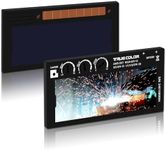
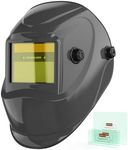
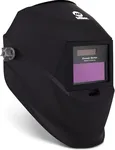
Auto-Darkening Filter (ADF)An auto-darkening filter automatically adjusts the lens shade based on the brightness of the welding arc. This feature is important because it allows you to keep the helmet on while setting up your work, improving safety and convenience. ADF helmets have sensors that detect the arc and darken the lens in milliseconds. Look for helmets with at least two sensors for basic welding tasks, and four sensors for more complex or varied work. If you frequently switch between different types of welding, an ADF helmet can save you time and effort.
Viewing AreaThe viewing area is the size of the window through which you see your work. A larger viewing area provides better visibility and can make it easier to see your work from different angles. Viewing areas typically range from 6 to 9 square inches. If you do detailed work or need to see a larger area, opt for a helmet with a bigger viewing area. However, larger viewing areas can make the helmet heavier, so balance visibility with comfort.
WeightThe weight of the helmet affects how comfortable it is to wear for extended periods. Heavier helmets can cause neck strain and fatigue, especially if you are welding for long hours. Lightweight helmets are generally more comfortable but may come with fewer features. Aim for a helmet that balances weight with the necessary features for your work. If you weld frequently, prioritize a lighter helmet to reduce strain.
Comfort and FitComfort and fit are crucial for ensuring that you can wear the helmet for long periods without discomfort. Look for helmets with adjustable headgear, padded interiors, and good ventilation. A well-fitting helmet will stay in place and provide consistent protection. Try on different helmets to find one that fits snugly but comfortably. If you wear glasses or other protective gear, make sure the helmet can accommodate them.
Sensitivity and Delay ControlsSensitivity controls allow you to adjust how easily the auto-darkening filter reacts to the welding arc. This is important if you work in different lighting conditions or with various welding processes. Delay controls adjust how long the lens stays dark after the welding arc stops, which can protect your eyes from the residual brightness. If you work in a well-lit environment or switch between different welding tasks, these controls can help you customize the helmet's performance to your needs.
Power SourceWelding helmets can be powered by batteries, solar cells, or a combination of both. Battery-powered helmets offer consistent performance but require regular battery changes. Solar-powered helmets are more convenient and environmentally friendly but may not perform as well in low-light conditions. Combination helmets offer the best of both worlds. Consider how often you weld and the lighting conditions in your workspace when choosing the power source.