Buying Guide for the Best Carving Knives
Choosing the right carving knife is essential for anyone who enjoys cooking, especially when it comes to preparing meats and large vegetables. A good carving knife can make the process smoother, safer, and more enjoyable. When selecting a carving knife, it's important to consider several key specifications to ensure you get the best fit for your needs. Here are the main aspects to look at and how to navigate them.Blade MaterialThe blade material of a carving knife is crucial as it affects the knife's sharpness, durability, and ease of maintenance. Common materials include stainless steel, high-carbon stainless steel, and ceramic. Stainless steel is resistant to rust and easy to maintain, making it a good all-around choice. High-carbon stainless steel is harder and holds an edge longer but may require more care to prevent rust. Ceramic blades are extremely sharp and lightweight but can be brittle and prone to chipping. Choose a material based on your willingness to maintain the knife and the type of cutting you do most often.
Blade LengthBlade length is important because it determines how easily you can carve through different sizes of meat and other foods. Carving knives typically range from 8 to 14 inches. Shorter blades (8-10 inches) offer more control and are easier to handle, making them suitable for smaller cuts of meat and vegetables. Longer blades (12-14 inches) are better for larger cuts, such as whole turkeys or roasts, as they can make longer, cleaner slices. Consider the types of foods you usually carve to determine the best blade length for you.
Blade FlexibilityBlade flexibility refers to how much the blade can bend without breaking. A more flexible blade can be useful for intricate cuts and working around bones, while a stiffer blade provides more control and precision for straight cuts. Flexible blades are often preferred for fish and poultry, while stiffer blades are better for larger cuts of meat. Think about the types of foods you carve most frequently to decide whether you need a more flexible or stiffer blade.
Handle MaterialThe handle material affects the comfort, grip, and durability of the carving knife. Common handle materials include wood, plastic, and composite. Wooden handles offer a traditional look and comfortable grip but may require more maintenance to prevent cracking. Plastic handles are durable, easy to clean, and often have ergonomic designs for better grip. Composite handles combine the best of both worlds, offering durability and comfort. Choose a handle material that feels comfortable in your hand and suits your maintenance preferences.
Weight and BalanceThe weight and balance of a carving knife can significantly impact its ease of use. A well-balanced knife feels comfortable and stable in your hand, making it easier to control. Heavier knives can provide more cutting power but may cause fatigue during extended use. Lighter knives are easier to maneuver but may require more effort to cut through tougher foods. Test the knife in your hand if possible to see how it feels and choose one that offers a good balance between weight and comfort for your specific needs.
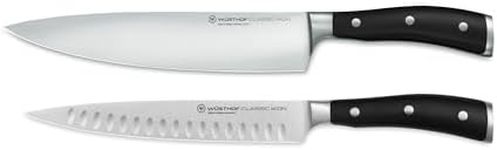
Edge TypeThe edge type of a carving knife determines how it cuts through food. Common edge types include straight, serrated, and granton. Straight edges provide clean, precise cuts and are easy to sharpen, making them ideal for most carving tasks. Serrated edges can cut through tougher surfaces like crusty bread or roasts but are harder to sharpen. Granton edges have small indentations that reduce friction and prevent food from sticking to the blade, making them great for slicing thin pieces. Consider the types of foods you carve and choose an edge type that suits your needs.