Buying Guide for the Best Broadleaf Killer
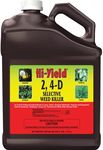
Choosing the right broadleaf killer for your lawn or garden can be a crucial decision to maintain the health and appearance of your green spaces. Broadleaf weeds can be persistent and damaging, so selecting an effective product is essential. Here are some key specifications to consider when picking the best broadleaf killer for your needs.Active IngredientsActive ingredients are the chemicals in the product that target and kill broadleaf weeds. This spec is important because different active ingredients work in various ways and can be more or less effective against certain types of weeds. Common active ingredients include 2,4-D, dicamba, and triclopyr. If you have a specific type of weed problem, research which active ingredient is most effective against it. For general broadleaf weed control, a product with a combination of these ingredients may be the best choice.
Application MethodThe application method refers to how the broadleaf killer is applied to your lawn or garden. This is important because it affects ease of use and coverage. Common methods include liquid concentrates, ready-to-use sprays, and granular formulas. Liquid concentrates are versatile and can be mixed to the desired strength, ready-to-use sprays are convenient for small areas, and granular formulas are easy to spread over large areas. Choose the method that best fits the size of your area and your comfort level with application.
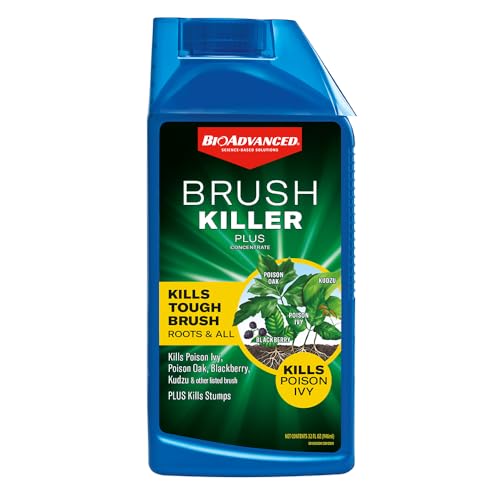
SelectivitySelectivity refers to whether the broadleaf killer targets only broadleaf weeds or if it also affects other plants. This is crucial to avoid damaging your desirable plants. Selective herbicides target only broadleaf weeds and are safe for use on lawns, while non-selective herbicides kill all plants they come into contact with. If you are treating a lawn, a selective herbicide is the best choice. For areas where you want to clear all vegetation, a non-selective herbicide may be more appropriate.
Coverage AreaCoverage area indicates how much area the product can treat. This is important to ensure you purchase enough product for your needs. Coverage is usually measured in square feet or acres. For small lawns or gardens, a product with a smaller coverage area may be sufficient. For larger properties, look for products that offer extensive coverage to avoid running out mid-treatment.
RainfastnessRainfastness is the time it takes for the product to become resistant to being washed away by rain. This spec is important because it affects the effectiveness of the treatment if it rains shortly after application. Products with shorter rainfastness times are more convenient and reliable in areas with unpredictable weather. If you live in a region with frequent rain, choose a product with a rainfastness time of one hour or less.
Safety and Environmental ImpactSafety and environmental impact refer to how safe the product is for humans, pets, and the environment. This is important to prevent harm to your family, pets, and local wildlife. Look for products that are labeled as safe for use around children and pets once dry, and consider environmentally friendly options that minimize harm to beneficial insects and water sources. If safety is a top priority, choose a product with a strong safety profile and clear usage instructions.