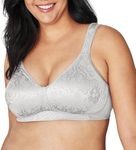
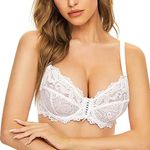
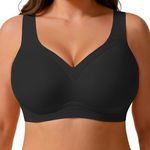
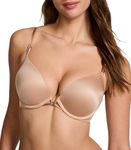
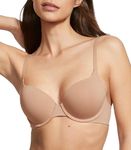
Buying Guide for the Best Bras That Lift And Separate
Choosing the right bra that lifts and separates can significantly enhance your comfort and confidence. The right bra will not only provide the necessary support but also improve your posture and the overall appearance of your outfits. When selecting a bra, it's essential to consider several key specifications to ensure you find the best fit for your body type and needs. Here are the key specs to look out for and how to navigate them.Cup SizeCup size is crucial as it determines how well the bra will fit your breasts. It is important because a cup that is too small can cause spillage and discomfort, while a cup that is too large won't provide the necessary support. Cup sizes range from A to K, with each letter representing a different volume. To find the right cup size, measure the fullest part of your bust and subtract the band size measurement. The difference will help you determine your cup size. Ensure the cups fully encase your breasts without any gaps or overflow.
Band SizeThe band size is the measurement around your ribcage, just under your bust. It is important because the band provides most of the bra's support. Band sizes typically range from 28 to 44 inches. To find your band size, measure snugly around your ribcage and round to the nearest even number. A well-fitting band should be snug but not too tight, and it should sit level around your body without riding up.
UnderwireUnderwire bras have a thin, semi-circular wire sewn into the fabric under each cup. This feature is important for providing additional lift and support, especially for larger busts. Underwires come in various shapes and flexibilities. If you need extra support and lift, look for bras with a sturdy underwire. However, if you find underwires uncomfortable, there are also wireless options that offer good support with other structural elements.
Strap WidthStrap width can affect both comfort and support. Wider straps are important for distributing weight more evenly, which can reduce shoulder strain, especially for larger busts. Strap widths can range from thin spaghetti straps to wide, cushioned straps. If you have a larger bust or experience shoulder discomfort, opt for bras with wider straps. For smaller busts or if you prefer a more delicate look, thinner straps may be sufficient.
Cup ShapeCup shape refers to the design and contour of the bra cups. This is important because different shapes can enhance the appearance of your bust and provide varying levels of lift and separation. Common shapes include full coverage, demi-cup, and balconette. Full coverage cups offer maximum support and coverage, ideal for larger busts. Demi-cups provide a more natural lift and are suitable for medium to smaller busts. Balconette bras lift from the bottom and create a rounded shape, perfect for enhancing cleavage.
Fabric and PaddingThe fabric and padding of a bra can affect both comfort and appearance. This is important because different materials offer varying levels of breathability, stretch, and support. Common fabrics include cotton, lace, and microfiber. Padding can range from lightly lined to heavily padded. If you prefer a natural look, choose bras with minimal padding and breathable fabrics. For added volume and shape, opt for bras with more padding and structured materials.
Closure TypeClosure type refers to how the bra fastens. This is important for ease of wear and adjustability. Common closure types include hook-and-eye, front closure, and pull-on styles. Hook-and-eye closures are adjustable and offer a secure fit, making them suitable for most bust sizes. Front closures are convenient for those with limited mobility or who prefer an easy on-and-off option. Pull-on styles are typically found in bralettes and offer a seamless look but may lack adjustability.