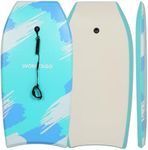
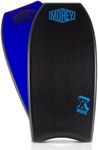
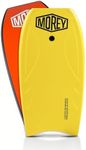
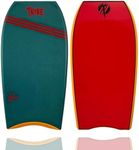
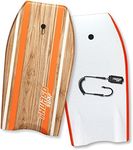
Buying Guide for the Best Boogie Board Bodyboards
Choosing the right boogie board, also known as a bodyboard, can greatly enhance your experience in the water. Whether you're a beginner or an experienced rider, selecting a board that matches your skill level, body type, and the conditions you'll be riding in is crucial. Here are some key specifications to consider when picking the perfect bodyboard for you.Board SizeBoard size is one of the most important factors to consider when choosing a bodyboard. It refers to the length and width of the board. A board that is too small will not provide enough buoyancy, while a board that is too large can be difficult to control. Generally, the board should reach up to your belly button when stood on end. For beginners, a larger board offers more stability and ease of use, while experienced riders might prefer a smaller, more maneuverable board.
Core MaterialThe core material of a bodyboard affects its flexibility, durability, and performance. Common core materials include polyethylene (PE), polypropylene (PP), and extruded polystyrene (EPS). PE cores are softer and more flexible, making them ideal for colder water conditions. PP cores are stiffer and lighter, providing better performance in warmer waters. EPS cores are lightweight and offer good buoyancy but are less durable. Choose a core material based on the water temperature and your riding style.
Deck MaterialThe deck material of a bodyboard impacts comfort and grip. Most decks are made from crosslinked polyethylene (XPE) or ethylene vinyl acetate (EVA). XPE decks are durable and provide a good grip, making them suitable for all skill levels. EVA decks are softer and more comfortable, ideal for long sessions in the water. Consider your comfort preferences and how much grip you need when selecting the deck material.
Tail ShapeThe tail shape of a bodyboard influences its speed and maneuverability. Common tail shapes include crescent and bat tails. Crescent tails offer better control and stability, making them ideal for beginners and those riding in smaller waves. Bat tails provide more speed and maneuverability, suitable for experienced riders and larger waves. Choose a tail shape based on your skill level and the type of waves you'll be riding.
RailsRails are the edges of the bodyboard and play a crucial role in how the board cuts through the water. They are typically described by their angle, such as 60/40 or 50/50. 60/40 rails offer a balance between speed and control, making them versatile for various conditions. 50/50 rails provide more speed but less control, suitable for advanced riders. Consider your riding style and the conditions you'll be in when choosing the rail configuration.
StringerA stringer is a rod that runs through the core of the bodyboard, providing additional strength and stiffness. Boards with stringers are more durable and offer better performance, especially in larger waves. Single stringers are common and provide a good balance of flexibility and strength. Double or triple stringers offer even more stiffness and durability, ideal for heavy riders or extreme conditions. Choose a board with the right stringer configuration based on your weight and the intensity of your rides.