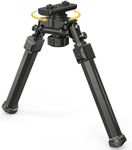
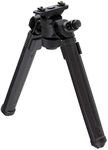
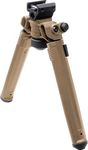
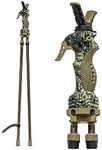
Buying Guide for the Best Bipod For Rifles
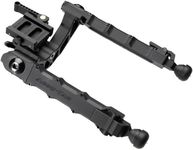
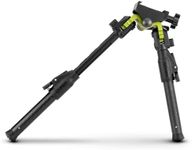
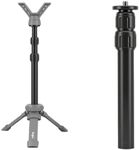
Choosing the right bipod for your rifle can significantly enhance your shooting experience by providing stability, accuracy, and comfort. A bipod is a two-legged support device that attaches to your rifle, allowing you to rest it on a surface and maintain a steady aim. When selecting a bipod, it's important to consider several key specifications to ensure it meets your needs and preferences. Here are the key specs to look out for and how to choose the best fit for you.Height AdjustmentHeight adjustment refers to the range of heights at which the bipod can be set. This is important because it allows you to adapt to different shooting positions and terrains. Bipods typically offer a range of height adjustments, from low-profile settings for prone shooting to higher settings for shooting from a bench or uneven ground. If you plan to shoot in various environments, a bipod with a wide range of height adjustments will be more versatile. For prone shooting, a lower height range (6-9 inches) is usually sufficient, while for bench rest or uneven terrain, a higher range (9-13 inches or more) may be necessary.
WeightThe weight of the bipod can affect the overall balance and portability of your rifle. A lighter bipod is easier to carry and maneuver, making it ideal for hunting or situations where you need to move frequently. However, a heavier bipod can provide more stability, which is beneficial for precision shooting or long-range targets. Consider your primary use: if you need to carry your rifle over long distances, opt for a lightweight bipod. If stability is your main concern, a heavier bipod might be the better choice.
MaterialBipods are typically made from materials like aluminum, steel, or carbon fiber. The material affects the durability, weight, and cost of the bipod. Aluminum bipods are lightweight and corrosion-resistant, making them a popular choice for many shooters. Steel bipods are more durable and stable but can be heavier. Carbon fiber bipods offer a good balance of strength and weight but are usually more expensive. Choose a material based on your priorities: for a balance of weight and durability, aluminum is a good option; for maximum stability, steel is preferable; and for the best weight-to-strength ratio, consider carbon fiber.
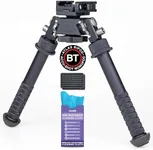
Attachment MechanismThe attachment mechanism is how the bipod connects to your rifle. Common attachment methods include Picatinny rails, swivel studs, and M-LOK systems. The right attachment mechanism depends on your rifle's configuration and your personal preference. Picatinny rails are versatile and widely used, making them a good choice if you have multiple rifles with this rail system. Swivel studs are traditional and simple to use, suitable for many hunting rifles. M-LOK systems offer a modern, modular approach and are becoming increasingly popular. Ensure the bipod you choose is compatible with your rifle's attachment points.
Leg Locking MechanismThe leg locking mechanism determines how the bipod legs are extended and locked into place. This is important for ensuring stability and ease of use. Common mechanisms include twist locks, lever locks, and push-button locks. Twist locks are simple and reliable but may take longer to adjust. Lever locks are quick and easy to use, allowing for rapid height adjustments. Push-button locks offer a balance of speed and security. Consider how quickly you need to adjust your bipod and choose a locking mechanism that suits your shooting style and preferences.
Swivel and TiltSwivel and tilt features allow the bipod to pivot and adjust to uneven terrain, providing a stable shooting platform. Swivel refers to the ability to rotate the rifle left and right, while tilt (or cant) allows the rifle to lean side to side. These features are important for maintaining accuracy on uneven ground or when tracking moving targets. If you often shoot in varied environments or need to make quick adjustments, a bipod with swivel and tilt capabilities will be beneficial. For static shooting positions, these features may be less critical.