Buying Guide for the Best Beginner Midi Keyboard
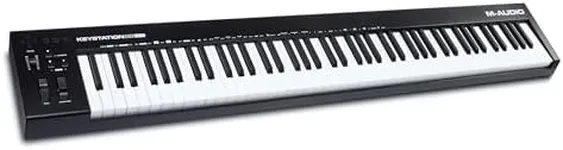
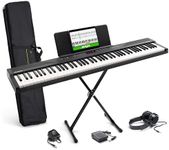
Choosing the right MIDI keyboard as a beginner can be a bit overwhelming, but with the right guidance, you can find the perfect fit for your needs. A MIDI keyboard is an essential tool for music production, allowing you to control virtual instruments and create music on your computer. When selecting a MIDI keyboard, consider the key specifications that will impact your experience and workflow. Here are the key specs to look out for and how to choose the best one for you.Number of KeysThe number of keys on a MIDI keyboard determines the range of notes you can play. MIDI keyboards typically come with 25, 49, 61, or 88 keys. For beginners, a 25-key keyboard is portable and great for simple melodies and bass lines. A 49-key keyboard offers a wider range and is suitable for more complex compositions. A 61-key keyboard provides even more range and is ideal for those who want to play with both hands. An 88-key keyboard is a full-sized piano keyboard, perfect for classical pianists or those who want the full range of a traditional piano. Choose based on the type of music you want to create and the space you have available.
Key ActionKey action refers to how the keys feel when you press them. There are three main types: synth-action, semi-weighted, and fully-weighted. Synth-action keys are light and springy, making them easy to play quickly, which is great for electronic music. Semi-weighted keys have a bit more resistance, providing a more piano-like feel without being too heavy. Fully-weighted keys mimic the feel of an acoustic piano, offering the most realistic experience for pianists. Beginners might prefer synth-action or semi-weighted keys for ease of use, while those with piano experience might opt for fully-weighted keys.
ConnectivityConnectivity options determine how you can connect your MIDI keyboard to other devices. Most MIDI keyboards connect via USB, which is simple and compatible with most computers and software. Some keyboards also offer traditional 5-pin MIDI ports for connecting to other MIDI hardware. Additionally, some models include Bluetooth for wireless connectivity. For beginners, USB connectivity is usually sufficient and the easiest to set up. If you plan to integrate with other MIDI hardware or want the flexibility of wireless, consider those additional options.
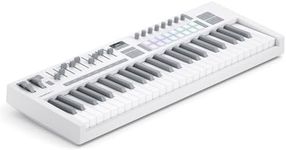
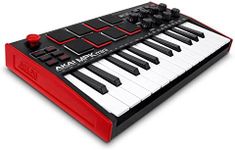
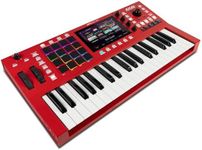
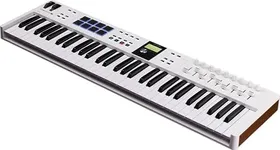
Pads and ControlsMany MIDI keyboards come with additional pads and controls, such as drum pads, knobs, faders, and buttons. These features allow you to control various aspects of your music production software directly from the keyboard. Drum pads are great for creating beats, while knobs and faders can be used to adjust parameters like volume and effects. For beginners, having a few pads and controls can enhance creativity and workflow, but it's important not to get overwhelmed. Start with a keyboard that has a manageable number of controls and expand as you become more comfortable.
Software CompatibilitySoftware compatibility ensures that your MIDI keyboard works seamlessly with your music production software (DAW). Most MIDI keyboards are compatible with popular DAWs like Ableton Live, FL Studio, Logic Pro, and others. Some keyboards come with bundled software or offer integration with specific DAWs, providing additional features and ease of use. As a beginner, check that the keyboard you choose is compatible with the software you plan to use, and consider any bundled software as a bonus to help you get started.
PortabilityPortability is an important factor if you plan to take your MIDI keyboard on the go. Smaller keyboards with fewer keys are generally more portable and easier to carry around. Look for a lightweight and compact design if you need to travel with your keyboard or have limited space at home. For beginners who want to practice and create music anywhere, a portable MIDI keyboard can be a great choice.