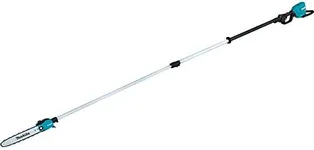
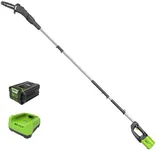
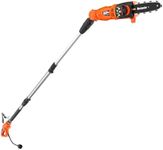
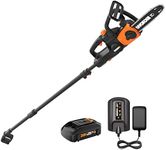
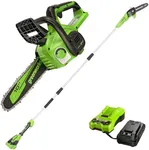
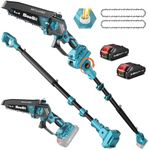
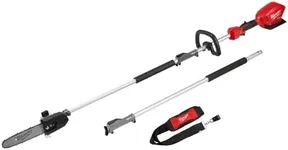
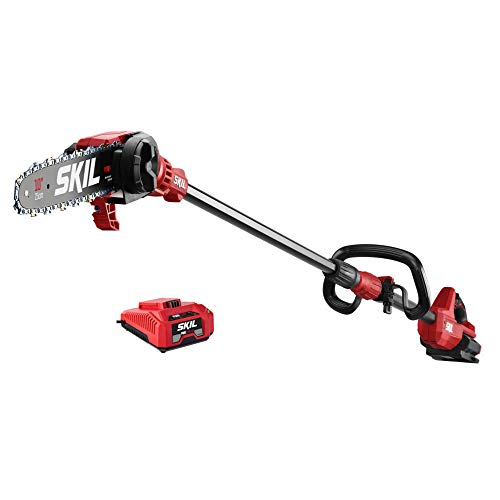
Buying Guide for the Best Battery Powered Pole Saws
Choosing the right battery-powered pole saw can make your yard work much easier and more efficient. These tools are great for trimming and pruning trees without the need for a ladder. When selecting a pole saw, it's important to consider several key specifications to ensure you get the best fit for your needs. Understanding these specs will help you make an informed decision and find a pole saw that meets your requirements.Battery VoltageBattery voltage indicates the power output of the pole saw. Higher voltage generally means more power, which can make cutting through thicker branches easier. Pole saws typically come in voltages ranging from 20V to 80V. For light pruning and occasional use, a lower voltage (20V-40V) may be sufficient. For more demanding tasks or frequent use, a higher voltage (40V-80V) will provide better performance. Consider the type of work you'll be doing to determine the appropriate voltage for your needs.
Battery Capacity (Ah)Battery capacity, measured in ampere-hours (Ah), determines how long the battery will last on a single charge. A higher Ah rating means longer runtime. Pole saws typically have battery capacities ranging from 2.0Ah to 5.0Ah or more. If you have a large yard or plan to use the saw for extended periods, a higher capacity battery will be beneficial. For smaller yards or shorter tasks, a lower capacity battery may be sufficient. Match the battery capacity to the duration of your typical tasks.
Bar LengthThe bar length of a pole saw refers to the length of the cutting blade. Common bar lengths range from 8 inches to 12 inches. A longer bar can cut through thicker branches more easily, but it may also make the saw heavier and harder to maneuver. For general pruning and trimming of smaller branches, an 8-inch bar is usually adequate. For larger branches or more heavy-duty tasks, a 10-inch or 12-inch bar may be more appropriate. Consider the size of the branches you'll be cutting to choose the right bar length.
Pole LengthPole length determines how high you can reach with the saw. Most pole saws have adjustable lengths, typically ranging from 6 feet to 10 feet or more. A longer pole allows you to reach higher branches without a ladder, but it can also make the saw more difficult to control. For lower branches and general yard maintenance, a shorter pole may be sufficient. For taller trees or hard-to-reach areas, a longer pole will be necessary. Think about the height of the branches you need to trim to select the appropriate pole length.
WeightThe weight of the pole saw affects how easy it is to handle and use for extended periods. Lighter saws are easier to maneuver and cause less fatigue, but they may also have less power or shorter battery life. Heavier saws can be more powerful and have longer runtimes, but they can be tiring to use. If you plan to use the saw for long periods or have limited upper body strength, a lighter model may be more suitable. For more demanding tasks, a heavier saw with more power may be necessary. Balance the weight with your physical capabilities and the type of work you'll be doing.
Chain SpeedChain speed, measured in feet per second (fps), indicates how fast the chain moves around the bar. Higher chain speeds result in faster and smoother cuts. Pole saws typically have chain speeds ranging from 10 fps to 20 fps or more. For light pruning and occasional use, a lower chain speed may be sufficient. For more frequent use or cutting thicker branches, a higher chain speed will provide better performance. Consider the type of cutting you'll be doing to determine the appropriate chain speed for your needs.
Ease of MaintenanceEase of maintenance includes features like tool-less chain tensioning, automatic oiling systems, and easy battery replacement. These features can make the pole saw easier to use and maintain, saving you time and effort. Look for models with user-friendly maintenance features if you prefer a low-maintenance tool. If you're comfortable with more hands-on maintenance, you may have more flexibility in your choice. Consider how much time and effort you're willing to invest in maintaining your pole saw when making your decision.