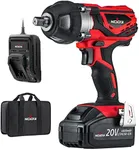
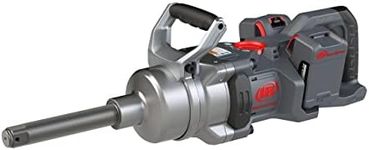
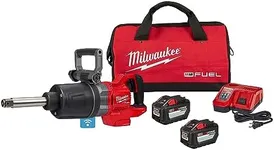
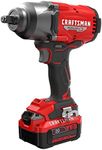
Buying Guide for the Best Battery Impact Wrench
Choosing the right battery impact wrench can make a significant difference in your work efficiency and ease of use. Whether you're a professional mechanic or a DIY enthusiast, understanding the key specifications will help you select a tool that meets your needs. Here are the main factors to consider when picking a battery impact wrench.TorqueTorque is the rotational force that the impact wrench can apply to a fastener. This is crucial because it determines the tool's ability to loosen or tighten bolts and nuts. Torque is measured in foot-pounds (ft-lbs) or Newton-meters (Nm). For light tasks like assembling furniture, a lower torque (up to 150 ft-lbs) is sufficient. For automotive work, medium torque (150-300 ft-lbs) is ideal. Heavy-duty tasks, such as working on large machinery, require high torque (over 300 ft-lbs). Choose the torque based on the toughest job you expect to handle.
Battery VoltageBattery voltage indicates the power output of the impact wrench. Higher voltage generally means more power and longer run time. Common voltages are 12V, 18V, and 20V. A 12V impact wrench is suitable for light-duty tasks and is more compact and lightweight. An 18V or 20V wrench offers more power and is better for medium to heavy-duty tasks. Consider the type of work you'll be doing and how much power you need when selecting the battery voltage.
Battery CapacityBattery capacity, measured in ampere-hours (Ah), determines how long the battery will last on a single charge. A higher capacity means longer run time. For occasional use, a battery with 2.0 Ah may be sufficient. For more frequent or intensive use, look for batteries with 4.0 Ah or higher. If you plan to use the tool for extended periods, having a higher capacity battery or multiple batteries can be very beneficial.
SpeedSpeed, measured in revolutions per minute (RPM), indicates how fast the impact wrench can rotate. Higher speeds allow for quicker fastening and loosening. Most impact wrenches offer variable speed settings, which provide more control over the tool. For general use, a speed range of 0-2,000 RPM is adequate. For more precise tasks, look for models with adjustable speed settings to match the speed to the job at hand.
Impacts Per Minute (IPM)Impacts per minute (IPM) measure how many times the hammer mechanism strikes the anvil per minute. Higher IPM means faster and more efficient fastening or loosening. For light to medium tasks, an IPM of 2,000-3,000 is usually sufficient. For heavy-duty applications, look for an IPM of 3,000 or higher. Consider the type of work you'll be doing and choose an IPM that matches your needs.
Weight and ErgonomicsThe weight and ergonomics of the impact wrench affect how comfortable it is to use, especially for extended periods. Lighter tools are easier to handle and reduce fatigue, but they may offer less power. Heavier tools provide more power but can be tiring to use. Look for a balance that suits your strength and the duration of use. Ergonomic features like a comfortable grip, balanced weight distribution, and anti-vibration handles can also enhance comfort and reduce strain.
Build Quality and DurabilityBuild quality and durability are important for ensuring the longevity of your impact wrench. Look for tools made from high-quality materials like metal and reinforced plastic. Features like a brushless motor can also enhance durability and performance. If you plan to use the tool frequently or in tough conditions, investing in a well-built, durable impact wrench will save you money and hassle in the long run.