Buying Guide for the Best Apartment Size Treadmill
Choosing the right apartment-size treadmill involves considering several key factors to ensure it fits your space, meets your fitness needs, and provides a comfortable workout experience. Since space is a premium in apartments, it's crucial to focus on the treadmill's dimensions, foldability, and noise levels, among other features. Here's a breakdown of the key specifications to help you make an informed decision.DimensionsThe dimensions of a treadmill are crucial, especially in an apartment setting where space is limited. This spec includes the length, width, and height of the treadmill. A compact treadmill typically measures around 60 inches in length and 30 inches in width. If you have a very small space, look for even smaller models. Measure your available space and ensure there is enough room for the treadmill and for you to comfortably get on and off.
FoldabilityFoldability refers to the treadmill's ability to fold up for storage. This is particularly important in an apartment where space is limited. Some treadmills fold flat and can be stored under a bed or against a wall, while others have a more vertical fold. If you need to save space when the treadmill is not in use, look for models that offer easy and compact folding mechanisms.
Noise LevelNoise level is an important consideration in an apartment to avoid disturbing neighbors or housemates. Treadmills with quieter motors and better cushioning systems tend to produce less noise. Look for models that are specifically designed to be quiet, often marketed as having 'whisper quiet' motors or noise reduction technology. If you plan to use the treadmill frequently or at odd hours, prioritize a quieter model.
Motor PowerMotor power, measured in horsepower (HP), determines the treadmill's performance and durability. For walking and light jogging, a motor with 1.5 to 2.5 HP is sufficient. For more intense running, look for a motor with at least 2.5 to 3.0 HP. Consider your fitness goals and how you plan to use the treadmill to choose the right motor power.
Running SurfaceThe running surface, or belt size, affects your comfort and safety while using the treadmill. A wider and longer belt provides more room to move, which is especially important for running. For walking, a belt size of 16 inches wide and 45 inches long may be sufficient. For running, look for at least 20 inches wide and 55 inches long. Consider your stride length and workout intensity when choosing the running surface.
Weight CapacityWeight capacity indicates the maximum user weight the treadmill can safely support. This is important for ensuring the treadmill's durability and your safety. Most compact treadmills have a weight capacity ranging from 220 to 300 pounds. Choose a treadmill with a weight capacity that comfortably exceeds your body weight.
CushioningCushioning refers to the shock absorption system of the treadmill, which reduces the impact on your joints. Good cushioning is important for preventing injuries and providing a comfortable workout. Treadmills with adjustable cushioning allow you to customize the level of shock absorption. If you have joint issues or plan to use the treadmill frequently, prioritize models with better cushioning.
Console FeaturesConsole features include the display and controls for tracking your workout metrics such as speed, distance, time, and calories burned. Some treadmills offer additional features like heart rate monitors, preset workout programs, and connectivity options for apps and music. Consider which features are important for your workout experience and motivation. If you enjoy tracking your progress or need entertainment while exercising, look for a treadmill with a more advanced console.
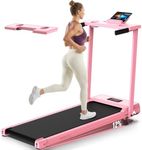
![GARVEE 2-in-1 Treadmill, [2.25 HP]](https://images-proxy.bestreviews.guide/iUjCTbHgZ4pvVRt9dj_ljjbGm4w=/0x150/https://m.media-amazon.com/images/I/415O0WjcsaL._AC_CX679_.jpg)