Buying Guide for the Best Affordable Stand Mixer
Choosing the right stand mixer can make a big difference in your kitchen, especially if you love baking or cooking. A stand mixer can save you time and effort, making it easier to mix, knead, and whip ingredients. When selecting an affordable stand mixer, it's important to consider several key specifications to ensure you get the best fit for your needs. Here are the main specs to look at and how to navigate them.Power (Wattage)The power of a stand mixer is measured in watts and indicates how strong the motor is. This is important because a more powerful motor can handle tougher doughs and larger batches without straining. Stand mixers typically range from 250 to 1000 watts. For light tasks like whipping cream or mixing cake batter, a mixer with 250-400 watts should suffice. For more demanding tasks like kneading bread dough, look for a mixer with at least 500 watts. Consider your typical baking needs to determine the right power level for you.
Bowl CapacityThe bowl capacity of a stand mixer is measured in quarts and determines how much you can mix at one time. This is important because a larger bowl allows you to make bigger batches, which is useful for large families or frequent bakers. Stand mixers usually have bowl capacities ranging from 3 to 7 quarts. For occasional baking or small batches, a 3-4 quart bowl should be sufficient. If you often bake in large quantities, consider a mixer with a 5-7 quart bowl. Think about the size of your typical recipes to choose the right bowl capacity.
Speed SettingsSpeed settings on a stand mixer allow you to control how fast the beaters or dough hooks move. This is important because different tasks require different speeds; for example, whipping cream needs a high speed, while kneading dough requires a low speed. Most stand mixers come with 3 to 12 speed settings. For basic use, 3-5 speeds are usually enough. If you want more control and versatility, look for a mixer with 6-12 speeds. Consider the variety of recipes you plan to make to decide how many speed settings you need.
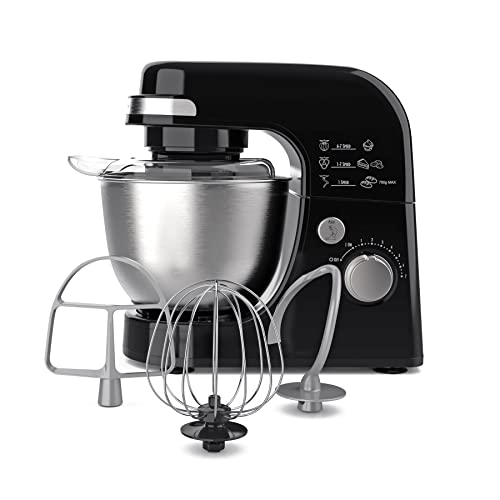
AttachmentsAttachments are additional tools that come with the stand mixer, such as dough hooks, whisk, and paddle attachments. These are important because they expand the functionality of the mixer, allowing you to perform a variety of tasks. Basic mixers usually come with a few essential attachments, while more advanced models may offer additional options like pasta makers or meat grinders. Think about the types of recipes you want to make and choose a mixer that includes the attachments you will use most often.
Build Quality and DurabilityThe build quality and durability of a stand mixer are crucial for long-term use. This is important because a well-built mixer will last longer and perform better over time. Look for mixers made with sturdy materials like metal rather than plastic. Check user reviews and ratings to get an idea of the mixer's reliability. If you plan to use the mixer frequently, investing in a durable model will save you money in the long run. Consider how often you will use the mixer and choose one that is built to withstand regular use.
Ease of CleaningEase of cleaning is an important factor to consider because it affects how much time and effort you will spend maintaining your mixer. This is important because a mixer that is easy to clean will encourage you to use it more often. Look for mixers with dishwasher-safe attachments and bowls, as well as designs that minimize crevices where food can get stuck. Consider how much time you are willing to spend on cleaning and choose a mixer that fits your preferences.