Buying Guide for the Best Above Ground Pool Filters
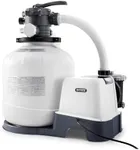
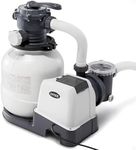
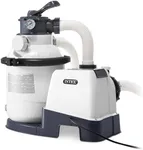
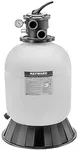
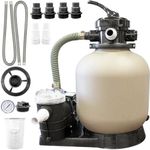
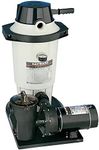
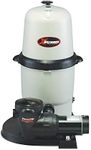
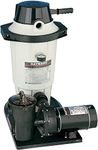
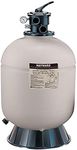
Choosing the right above-ground pool filter is crucial for maintaining clean and clear water in your pool. The filter helps remove debris, dirt, and other contaminants, ensuring a safe and enjoyable swimming experience. When selecting a pool filter, it's important to consider several key specifications to find the best fit for your needs. Understanding these specs will help you make an informed decision and keep your pool in top condition.Filter TypeThere are three main types of above-ground pool filters: sand, cartridge, and diatomaceous earth (DE). Sand filters are the most common and use sand to trap debris. They are easy to maintain but may not filter as finely as other types. Cartridge filters use a paper-like material to capture particles and are known for their efficiency and ease of cleaning. DE filters use a fine powder to filter out the smallest particles, providing the best filtration but requiring more maintenance. Choose a filter type based on your preference for maintenance and the level of filtration you need.
Flow RateThe flow rate, measured in gallons per minute (GPM), indicates how much water the filter can process in a given time. A higher flow rate means the filter can clean the pool water more quickly. To determine the right flow rate for your pool, consider the pool's volume and the desired turnover rate (how often the entire pool's water should be filtered). For example, a larger pool will need a filter with a higher flow rate to ensure efficient cleaning. Match the flow rate to your pool size to maintain optimal water quality.
Filter CapacityFilter capacity refers to the amount of debris the filter can hold before it needs to be cleaned or backwashed. A larger capacity means less frequent maintenance, which can be convenient for busy pool owners. However, larger capacity filters may also be more expensive. Consider how often you are willing to perform maintenance and the typical debris load in your pool when choosing the filter capacity. If your pool is surrounded by trees or gets a lot of use, a higher capacity filter may be beneficial.
Maintenance RequirementsDifferent filters have varying maintenance needs. Sand filters require backwashing to clean the sand, which is a relatively simple process but needs to be done regularly. Cartridge filters need to be removed and hosed down periodically, and the cartridges replaced every few years. DE filters require the most maintenance, including backwashing and adding new DE powder. Consider how much time and effort you are willing to invest in maintenance when selecting a filter. If you prefer low-maintenance options, a sand or cartridge filter might be more suitable.
Energy EfficiencyEnergy efficiency is an important consideration, especially if you plan to run your pool filter for extended periods. More efficient filters can save on electricity costs over time. Look for filters with energy-efficient pumps and motors, and consider variable-speed pumps that can adjust the flow rate based on the pool's needs. Choosing an energy-efficient filter can help reduce your overall pool maintenance costs and is better for the environment.