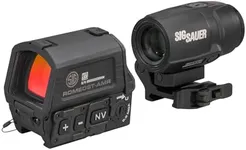
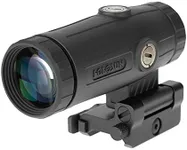
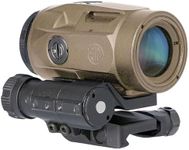
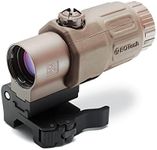
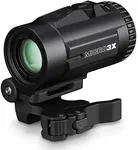
Buying Guide for the Best 3 X Magnifiers
Choosing the right magnifier can greatly enhance your ability to see small details, whether you're reading fine print, working on a hobby, or examining intricate objects. To find the best magnifier for your needs, it's important to understand the key specifications and how they relate to your specific use case. Here are the main factors to consider when selecting a magnifier.Magnification PowerMagnification power indicates how much larger an object will appear when viewed through the magnifier. This is crucial because it determines how much detail you can see. Magnifiers typically range from 2x to 10x magnification. For general reading or everyday tasks, a 2x to 3x magnifier is usually sufficient. For more detailed work, such as examining stamps or intricate crafts, you might need a higher magnification, like 5x to 10x. Choose a magnification power that matches the level of detail you need to see.
Lens SizeThe size of the lens affects how much of the object you can see at once. Larger lenses provide a wider field of view, which can be helpful for reading or viewing larger objects. However, larger lenses can also be heavier and more cumbersome to use. Smaller lenses are more portable and easier to handle but offer a smaller viewing area. Consider what you will be using the magnifier for and choose a lens size that provides a good balance between field of view and ease of use.
Lens MaterialMagnifier lenses are typically made from either glass or acrylic. Glass lenses offer superior clarity and are more resistant to scratches, making them ideal for high-quality, long-term use. However, they are heavier and more expensive. Acrylic lenses are lighter and more affordable, but they can scratch more easily and may not provide the same level of clarity as glass. If you need a magnifier for occasional use or portability, an acrylic lens might be sufficient. For frequent use or professional tasks, a glass lens is likely a better choice.
LightingSome magnifiers come with built-in lighting, which can be very helpful in low-light conditions or for tasks that require extra illumination. LED lights are commonly used because they are bright and energy-efficient. Consider whether you will be using the magnifier in dim environments or need additional light to see fine details. If so, a magnifier with built-in lighting can be a valuable feature.
ErgonomicsThe design and comfort of the magnifier are important, especially if you will be using it for extended periods. Look for features like a comfortable handle, lightweight construction, and a design that is easy to hold and use. Some magnifiers also come with stands or hands-free options, which can reduce strain and make it easier to work on detailed tasks. Choose a magnifier that feels comfortable and suits the way you plan to use it.