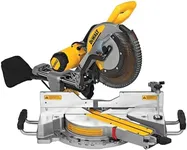
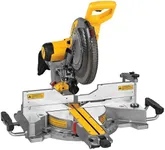
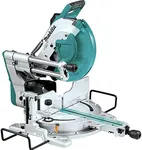
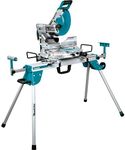
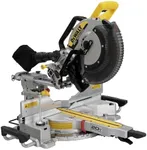
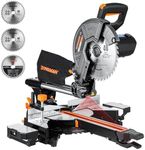
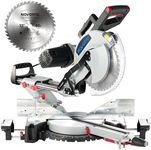
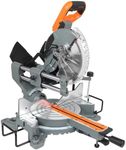
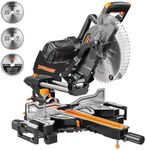
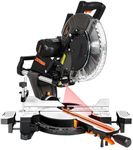
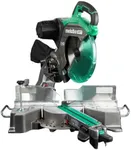
Buying Guide for the Best 12 Inch Sliding Compound Miter Saw
Choosing the right 12-inch sliding compound miter saw can make a significant difference in the quality and efficiency of your woodworking projects. This type of saw is versatile and powerful, allowing you to make precise crosscuts, bevel cuts, and miter cuts. To find the best fit for your needs, it's important to understand the key specifications and how they impact the saw's performance. Here are the main specs to consider and how to navigate them.Blade SizeThe blade size of a miter saw determines the maximum depth and width of the cut it can make. A 12-inch blade is larger than the more common 10-inch blade, allowing for deeper and wider cuts. This is particularly important if you are working with larger pieces of wood or need to make more substantial cuts. If your projects involve heavy-duty cutting, a 12-inch blade is a good choice. However, if you mostly work with smaller pieces, a smaller blade might suffice.
Sliding FeatureThe sliding feature of a miter saw allows the blade to move forward and backward, increasing the cutting capacity. This is crucial for cutting wider boards that a non-sliding saw cannot handle. If you frequently work with wide materials, a sliding miter saw will be beneficial. For those who primarily cut narrow pieces, a non-sliding saw might be adequate and more compact.
Bevel RangeThe bevel range indicates the angles at which the saw can tilt to make bevel cuts. A single bevel saw tilts in one direction, while a dual bevel saw tilts in both directions. Dual bevel saws are more versatile and save time since you don't need to flip the workpiece to make opposite bevel cuts. If your projects often require complex bevel cuts, a dual bevel saw is ideal. For simpler tasks, a single bevel saw may be sufficient.
Miter RangeThe miter range refers to the angles at which the saw can pivot to make miter cuts. A wider miter range provides more flexibility for various cutting angles. Most miter saws offer a range from 0 to 45 degrees, but some can go beyond that. If you need to make a variety of angled cuts, look for a saw with a broader miter range. For standard cuts, a basic range will do.
Cutting CapacityCutting capacity is the maximum size of the material the saw can cut in a single pass. This includes both the vertical and horizontal capacities. Higher cutting capacity is essential for larger projects and thicker materials. If you work with large, thick pieces of wood, ensure the saw has a high cutting capacity. For smaller, thinner materials, a lower capacity will be adequate.
Motor PowerMotor power, measured in amps, determines the saw's ability to cut through tough materials. Higher motor power means more cutting strength and efficiency. If you often cut dense or hardwoods, a saw with a powerful motor (15 amps or more) is recommended. For lighter, softer woods, a less powerful motor will be sufficient.
Laser GuideA laser guide projects a line onto the material, showing where the blade will cut. This feature enhances accuracy and helps you make precise cuts. If precision is crucial in your projects, a saw with a laser guide is beneficial. For less critical cuts, this feature may not be necessary.
Dust CollectionDust collection systems help keep your workspace clean by capturing sawdust. Effective dust collection is important for maintaining a clear line of sight and reducing cleanup time. If you work in a small or indoor space, a saw with a good dust collection system is essential. For outdoor or occasional use, this feature might be less critical.