Buying Guide for the Best 12 Inch Miter Saw Blade
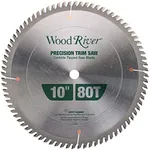
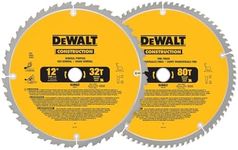
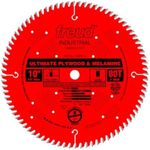
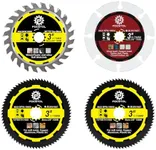
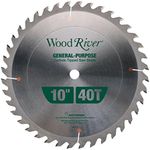
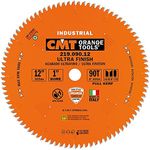
Choosing the right 12-inch miter saw blade is crucial for achieving clean, precise cuts in your woodworking projects. The right blade can make a significant difference in the quality of your work, the efficiency of your cuts, and the longevity of your saw. To make an informed decision, you need to understand the key specifications of miter saw blades and how they relate to your specific needs.Tooth CountThe tooth count of a miter saw blade refers to the number of teeth around the edge of the blade. This spec is important because it affects the smoothness and speed of the cut. Blades with a higher tooth count (e.g., 80-100 teeth) produce smoother cuts and are ideal for fine woodworking and cutting delicate materials. Blades with a lower tooth count (e.g., 24-40 teeth) cut faster and are better suited for rough cuts and thicker materials. Choose a higher tooth count for detailed, finish work and a lower tooth count for general construction or framing.
Tooth ConfigurationTooth configuration refers to the shape and arrangement of the teeth on the blade. This spec is important because it influences the type of cut and the material the blade can handle. Common configurations include ATB (Alternate Top Bevel), which is good for cross-cutting wood, and TCG (Triple Chip Grind), which is better for cutting harder materials like laminate or metal. Choose a tooth configuration based on the primary material you will be cutting and the type of cuts you need to make.
Kerf WidthKerf width is the thickness of the cut that the blade makes in the material. This spec is important because it affects the amount of material removed and the precision of the cut. Thin kerf blades remove less material and require less power, making them ideal for fine, precise cuts and for use with less powerful saws. Standard kerf blades are thicker and more durable, suitable for heavy-duty cutting and more powerful saws. Choose a thin kerf for precision work and a standard kerf for durability and heavy-duty tasks.
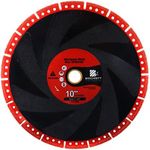
Blade MaterialThe material of the blade affects its durability and performance. Common materials include high-speed steel (HSS), carbide-tipped, and diamond-tipped. HSS blades are less expensive and good for general-purpose cutting but wear out faster. Carbide-tipped blades are more durable and stay sharp longer, making them ideal for frequent use and cutting harder materials. Diamond-tipped blades are the most durable and are used for cutting very hard materials like tile and stone. Choose a blade material based on the frequency of use and the hardness of the materials you will be cutting.
Hook AngleThe hook angle of a blade refers to the angle of the teeth relative to the center of the blade. This spec is important because it affects the aggressiveness of the cut and the feed rate. Positive hook angles (teeth leaning forward) are more aggressive and cut faster, making them suitable for ripping and cutting softwoods. Negative hook angles (teeth leaning backward) are less aggressive and provide smoother cuts, ideal for cross-cutting and cutting hardwoods. Choose a positive hook angle for fast, aggressive cuts and a negative hook angle for smooth, controlled cuts.