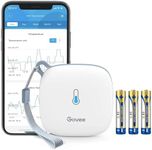
Buying Guide for the Best Wireless Temperature Data Loggers
When choosing a wireless temperature data logger, it's important to consider several key specifications to ensure you select the right device for your needs. A wireless temperature data logger is a device that records temperature data over time and transmits this data wirelessly to a computer or cloud storage. These devices are essential for monitoring and maintaining temperature-sensitive environments, such as in laboratories, food storage, and transportation. Understanding the key specifications will help you make an informed decision and ensure the device meets your specific requirements.Temperature RangeThe temperature range indicates the minimum and maximum temperatures that the data logger can accurately measure. This is important because it determines whether the device can operate effectively in your specific environment. For example, if you need to monitor a freezer, you'll need a data logger that can measure sub-zero temperatures. Conversely, for high-temperature environments, ensure the device can handle those upper limits. Choose a temperature range that covers the extremes of your monitoring needs.
AccuracyAccuracy refers to how close the data logger's measurements are to the actual temperature. This is crucial for applications where precise temperature control is necessary, such as in pharmaceuticals or scientific research. Accuracy is usually expressed in degrees (e.g., ±0.5°C). Higher accuracy is better, but it may not be necessary for all applications. Consider how critical precise temperature readings are for your use case and choose a device with an appropriate accuracy level.
Battery LifeBattery life indicates how long the data logger can operate before needing a battery replacement or recharge. This is important for ensuring continuous monitoring without frequent interruptions. Battery life can range from a few months to several years, depending on the device and usage. If you need long-term monitoring without maintenance, opt for a data logger with a longer battery life. For short-term projects, a shorter battery life may be sufficient.
Memory CapacityMemory capacity refers to the amount of data the logger can store before it needs to be downloaded or cleared. This is important for ensuring that no data is lost during the monitoring period. Memory capacity is usually measured in data points or readings. If you need to monitor temperature over a long period or at high frequency, choose a data logger with a larger memory capacity. For less frequent monitoring, a smaller memory may be adequate.
Wireless RangeWireless range indicates the maximum distance over which the data logger can transmit data to a receiver or network. This is important for ensuring reliable data transmission, especially in large or complex environments. Wireless range can vary from a few meters to several kilometers. Consider the layout of your monitoring area and choose a data logger with a wireless range that covers the necessary distance. For larger areas, you may need a device with a longer range or the ability to use repeaters.
Data Transmission FrequencyData transmission frequency refers to how often the data logger sends recorded data to the receiver. This is important for real-time monitoring and timely data analysis. Transmission frequency can range from every few seconds to once a day. If you need real-time updates, choose a data logger with a higher transmission frequency. For less critical applications, a lower frequency may be sufficient and can help conserve battery life.
Durability and Build QualityDurability and build quality refer to the physical robustness of the data logger and its ability to withstand environmental conditions. This is important for ensuring the device can operate reliably in harsh or demanding environments. Look for data loggers with rugged construction, waterproofing, and resistance to dust and other contaminants if you need to use them in challenging conditions. For standard indoor environments, a less rugged device may be adequate.
Software CompatibilitySoftware compatibility refers to the ability of the data logger to work with various software platforms for data analysis and reporting. This is important for ensuring you can easily access and interpret the recorded data. Check if the data logger is compatible with your existing software or if it comes with its own user-friendly software. Choose a device that integrates well with your data management system and offers the features you need for analysis and reporting.