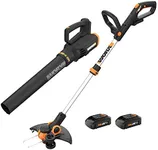
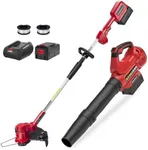
Buying Guide for the Best Weed Wackers And Edgers Combos
When it comes to maintaining a well-manicured lawn, a weed wacker and edger combo can be an invaluable tool. These devices help you trim grass and weeds in hard-to-reach areas and create clean, defined edges along sidewalks, driveways, and flower beds. Choosing the right combo involves understanding the key specifications and how they align with your specific needs. Here’s a guide to help you make an informed decision.Power SourceThe power source of a weed wacker and edger combo can be either gas, electric (corded), or battery-operated. Gas-powered models are typically more powerful and suitable for large yards or heavy-duty tasks, but they are noisier and require more maintenance. Electric models are quieter and lighter, making them ideal for smaller yards, but they need to be plugged in, which can limit mobility. Battery-operated models offer a good balance of power and convenience, with the added benefit of being cordless, but they require recharging and may have limited run time. Choose based on the size of your yard and your preference for mobility and maintenance.
Cutting WidthThe cutting width refers to the diameter of the area the tool can cut in a single pass. A larger cutting width means you can cover more ground quickly, which is useful for larger areas. Cutting widths typically range from about 10 to 18 inches. For small to medium-sized yards, a cutting width of 10-14 inches is usually sufficient. For larger yards, consider a cutting width of 15 inches or more to save time and effort.
WeightThe weight of the tool affects how easy it is to handle and maneuver. Lighter models are easier to use for extended periods and are less tiring, making them suitable for smaller yards or users who may not have a lot of upper body strength. Heavier models, while potentially more powerful, can be more cumbersome and tiring to use. Consider your physical capability and the size of your yard when choosing the weight of your tool.
AdjustabilityAdjustability features, such as telescoping shafts and adjustable handles, can make a big difference in comfort and usability. These features allow you to customize the tool to your height and preferred working position, reducing strain and improving control. If multiple people will be using the tool, or if you have specific ergonomic needs, look for models with good adjustability options.
Line Feed SystemThe line feed system determines how the cutting line is dispensed. There are three main types: bump feed, automatic feed, and fixed line. Bump feed systems require you to tap the head on the ground to release more line, which gives you control but can be cumbersome. Automatic feed systems release line as needed without user intervention, offering convenience but potentially wasting line. Fixed line systems use pre-cut lengths of line, which can be easy to replace but may require more frequent stops. Choose based on your preference for control versus convenience.
Battery Life (for cordless models)For battery-operated models, battery life is crucial as it determines how long you can use the tool before needing to recharge. Battery life is typically measured in amp-hours (Ah), with higher values indicating longer run times. For small yards, a battery life of 2-3 Ah may be sufficient. For larger yards or more intensive tasks, look for batteries with 4 Ah or more. Consider how long your typical yard work session lasts and choose a battery that can handle that duration.
Ease of MaintenanceEase of maintenance includes how simple it is to replace the cutting line, clean the tool, and perform any necessary upkeep. Gas models require more maintenance, such as fuel mixing and engine care, while electric and battery models are generally easier to maintain. Look for features like easy-access spools and tool-free adjustments to make maintenance simpler. Consider how much time and effort you are willing to invest in maintaining your tool.