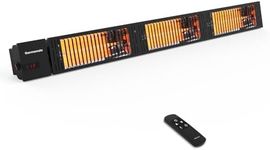
Buying Guide for the Best Wall Mounted Patio Heaters
Choosing the right wall-mounted patio heater can significantly enhance your outdoor experience, providing warmth and comfort during cooler evenings. When selecting a patio heater, it's important to consider several key specifications to ensure you get the best fit for your needs. Understanding these specifications will help you make an informed decision and enjoy your outdoor space to the fullest.Heating Power (BTUs or Watts)Heating power indicates how much heat the patio heater can produce. It's measured in BTUs (British Thermal Units) for gas heaters and watts for electric heaters. Higher values mean more heat output. For small patios or balconies, a heater with lower BTUs or watts (around 1,500-3,000 watts or 5,000-10,000 BTUs) may suffice. For larger areas, you might need a heater with higher power (up to 5,000 watts or 40,000 BTUs). Consider the size of your outdoor space and how warm you want it to be when choosing the heating power.
Fuel TypeWall-mounted patio heaters can be powered by electricity, natural gas, or propane. Electric heaters are easy to install and maintain, making them ideal for smaller spaces or areas with electrical outlets. Natural gas heaters provide a continuous supply of fuel and are cost-effective for long-term use but require a gas line. Propane heaters are portable and can be used in areas without a gas line or electrical outlet but require regular refilling of propane tanks. Choose the fuel type based on availability, convenience, and your specific needs.
Mounting and InstallationThe mounting and installation process varies between models. Some heaters come with brackets and hardware for easy wall mounting, while others may require professional installation, especially if they need to be connected to a gas line. Consider your DIY skills and whether you prefer a plug-and-play model or are comfortable with more complex installations. Ensure the heater can be securely mounted to your wall and that it fits the layout of your outdoor space.
Heat Coverage AreaThe heat coverage area indicates how much space the heater can effectively warm. This is usually measured in square feet or meters. Smaller heaters may cover around 100-200 square feet, while larger models can cover up to 500 square feet or more. Assess the size of your patio or outdoor area and choose a heater that can adequately cover the space. If you have a larger area, you might need multiple heaters to ensure even heat distribution.
Safety FeaturesSafety features are crucial for ensuring safe operation of your patio heater. Look for features such as automatic shut-off, tip-over protection, and overheat protection. Automatic shut-off turns the heater off if it gets too hot or if it tips over, preventing accidents. Overheat protection ensures the heater doesn't exceed safe temperature levels. These features are especially important if you have children or pets. Prioritize heaters with robust safety features to ensure peace of mind while using the heater.
Weather ResistanceSince patio heaters are used outdoors, they need to withstand various weather conditions. Look for heaters with weather-resistant materials and finishes, such as stainless steel or powder-coated metal, which can resist rust and corrosion. Some models are designed to be waterproof or have protective covers to shield them from rain and snow. Consider the typical weather in your area and choose a heater that can endure those conditions to ensure longevity and reliable performance.
Control OptionsControl options refer to how you can operate the heater. Some models come with simple on/off switches, while others offer more advanced controls like remote controls, adjustable heat settings, and timers. Remote controls and adjustable settings provide convenience and allow you to customize the heat output to your preference. Timers can help save energy by automatically turning off the heater after a set period. Think about how much control you want over the heater and choose a model that offers the features you find most useful.